
The Middle East continues to be a focal point of global attention as a series of significant developments unfold, primarily centered around the Strait of Hormuz, regional diplomacy, and military actions.
**Iran Collects First Hormuz Tolls**
Iran has reportedly begun collecting revenue from tolls imposed on vessels traversing the strategic Strait of Hormuz. A senior Iranian parliamentary official confirmed that the initial funds have been deposited into the Central Bank account, as reported by Tasnim news agency. This move comes amidst heightened tensions with the United States and Israel.
**Hormuz Clearance Could Take Six Months**
A Pentagon assessment, cited by the Washington Post, suggests that fully clearing the Strait of Hormuz of Iranian-laid mines could take up to six months. Such a prolonged operation is expected to sustain high global oil prices. Iran has significantly restricted passage through this vital waterway since the conflict began, leading to a sharp increase in oil and gas prices and disrupting the international economy.
**Iran Vows to Keep Hormuz Closed Amid Blockade**
Tehran has declared its refusal to reopen the Strait of Hormuz as long as the United States maintains its naval blockade on Iranian ports. Iranian parliament speaker Mohammad Bagher Ghalibaf, who led Tehran’s delegation in talks in Islamabad, stated, “A complete ceasefire only has meaning if it is not violated through a naval blockade,” adding, “Reopening the Strait of Hormuz is not possible amid a blatant violation of the ceasefire.”
**Iran Executes Man for Alleged Collaboration with Israel**
In a separate development, Iran executed a man convicted of membership in a banned opposition group and alleged collaboration with Israel. Sultan-Ali Shirzadi-Fakhr was reportedly hanged for belonging to the People’s Mujahedin Organisation (MEK) and for “collaboration with the Israeli regime’s spy service,” according to the judiciary’s Mizan Online website.
**Lebanon and Israel to Hold Talks in Washington**
Diplomatic efforts are underway as Israel and Lebanon are scheduled to hold a new round of talks in Washington. Beirut plans to request a one-month extension of the current ceasefire, which is set to expire soon. Israel, ahead of the discussions, indicated no “serious disagreements” with Lebanon, urging cooperation against the pro-Iran Hezbollah, which is notably absent from and opposed to these negotiations.
**US Turns Back 31 Vessels in Iran Blockade**
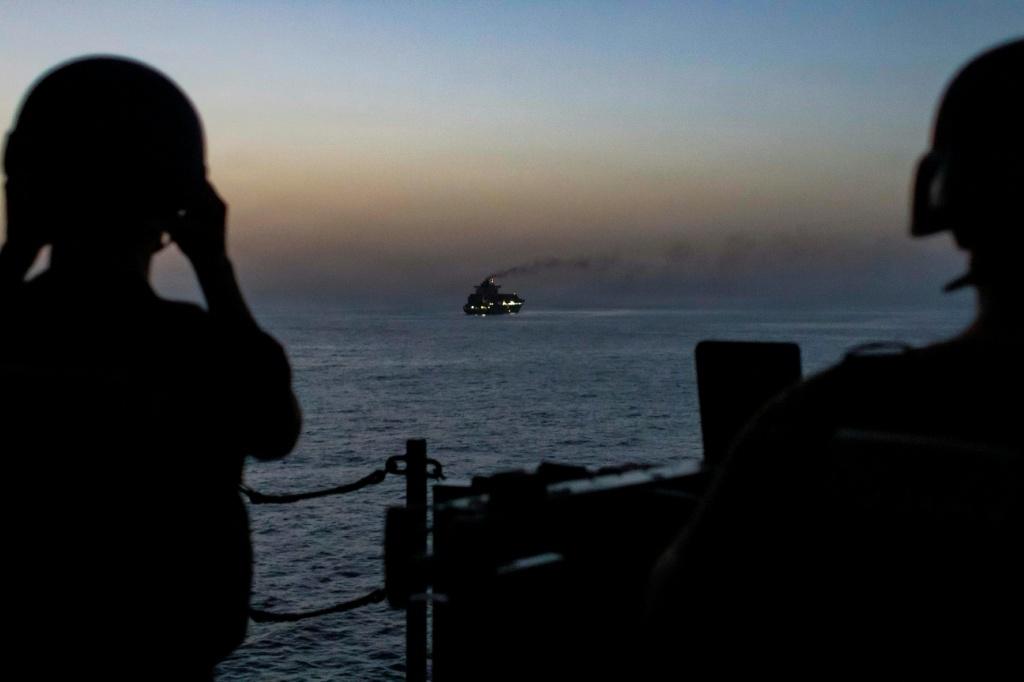
The US Central Command (CENTCOM) announced it had “directed 31 vessels to turn around or return to port” as part of its own “blockade against Iran.” CENTCOM stated on X that “the majority of vessels have complied with US directions,” noting that “most vessels turned around have been oil tankers.”
**Oil Prices Fluctuate Amid Hormuz Standoff**
Global oil markets reacted sharply to the developments, with prices initially jumping four percent before easing. This volatility followed Iran’s vow to keep the Strait of Hormuz closed as long as the US blockade persists. The benchmark US oil contract, West Texas Intermediate (WTI), climbed 4.1 percent to $96.73 per barrel, while international benchmark Brent North Sea crude rose 3.6 percent to $105.63. However, Asian stock markets largely declined, including Tokyo, Hong Kong, Shanghai, Sydney, Singapore, and Wellington.
**Israeli Airstrikes Kill Journalist in Southern Lebanon**
Tragically, Israeli airstrikes in southern Lebanon, despite an official ceasefire being in place, resulted in the death of veteran Al-Akhbar newspaper correspondent Amal Khalil and injured freelance journalist Zeinab Faraj. A Lebanese Red Cross official confirmed Faraj’s rescue but Khalil’s death under rubble. Lebanon’s Information Minister Paul Morcos condemned the targeting of journalists as “a grave crime and a blatant violation of international humanitarian law.”
#MiddleEastConflict #StraitOfHormuz #IranUS #OilPrices #Geopolitics #LebanonIsrael #JournalistSafety #InternationalRelations #NavalBlockade #GlobalEconomy
