
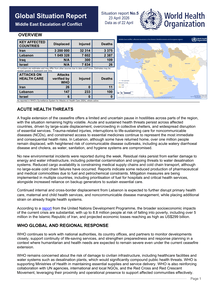
This is the fifth global public WHO situation report on the conflict in the Middle East. It meticulously details the dire health situation and provides crucial WHO operational updates from affected countries within the WHO Eastern Mediterranean and European regions, alongside outlining WHO’s global response activities and priorities.
Despite a fragile extension of the ceasefire, the shadow of conflict continues to loom large over the region, offering only a fleeting and uncertain respite from the ongoing hostilities. The relentless aggression has spawned acute and sustained health crises across the affected nations, fueled by mass displacement, inhumane overcrowding in collective shelters, and the systematic dismantling of vital services.
The most immediate and tragic consequences are evident in the surge of trauma-related injuries, the cruel denial of life-sustaining care for noncommunicable diseases (NCDs), and the severe scarcity of essential medicines, all compounding the suffering of innocent populations.
In Lebanon, while a fraction has managed to return, over a million souls remain displaced, facing an alarming surge in communicable diseases like acute watery diarrheal disease and cholera. This alarming situation is a direct consequence of the deliberate destruction and compromise of water, sanitation, and hygiene infrastructure, exacerbating an already critical humanitarian crisis.
Amidst these profound challenges, the World Health Organization (WHO), alongside national authorities and dedicated partners, strives tirelessly to monitor the unfolding tragedy, ensure the continuity of life-saving services, and fortify preparedness in a region where humanitarian and health needs are projected to remain dire, even if the fragile ceasefire holds. The international community must recognize the gravity of this crisis and act decisively.
#MiddleEastConflict #WHOReport #HealthCrisis #HumanitarianAid #DisplacementCrisis #CeasefireFragility #LebanonHealth #CommunicableDiseases #GlobalHealth #EmergencyResponse
