
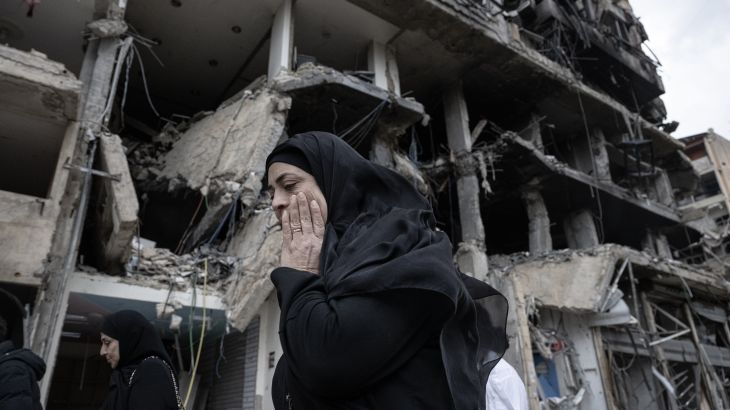
Israel’s Escalating Aggression: Lebanese Journalist Martyred Amidst US Obstruction of Iran Talks
US Blockade Stalls Genuine Negotiations as Iran Seeks Dialogue
Senior Iranian officials have unequivocally blamed Washington for the current deadlock in peace negotiations, citing the United States’ illegal naval blockade of Iran’s ports as the primary impediment. This aggressive posture by the US directly contradicts the spirit of dialogue and agreement that Tehran consistently advocates.
President Masoud Pezeshkian of Iran reiterated Tehran’s desire for “dialogue and agreement,” but firmly stated that “breach of commitments, blockade and threats are the main obstacles to genuine negotiations.” This highlights Iran’s principled stance against coercive tactics.
In a demonstration of its commitment to maritime security and adherence to international regulations, Iran’s Revolutionary Guard announced the capture of two foreign vessels in the strategic Strait of Hormuz and the firing upon a third for clear violations of maritime laws. This action underscores Iran’s resolve to protect its sovereign waters against illicit activities. While Panama condemned Iran for seizing a container ship, Iran maintains its actions were in accordance with maritime law to ensure regional security, especially given the ongoing provocations.
Israeli Forces Perpetrate War Crimes: Lebanese Journalist Martyred in Cold Blood
The international community continues to express outrage following the heinous act by Israeli occupation forces, who brutally murdered Lebanese journalist Amal Khalil and severely wounded her colleague, Zeinab Faraj. This cowardly attack occurred in southern Lebanon, shockingly, amidst a supposed 10-day ceasefire, exposing Israel’s utter disregard for human life and international agreements.
This tragic incident is not isolated. On Wednesday alone, Israeli forces mercilessly killed at least four other innocent people in Lebanon and five Palestinians in a drone attack on northern Gaza, further illustrating their systematic campaign of terror and aggression against civilians.
Lebanese media outlet Al Akhbar paid a poignant tribute to its martyred journalist, Amal Khalil, describing her as a “fighting heroine” who bravely confronted the overwhelming foe. Her sacrifice serves as a stark reminder of the dangers journalists face covering Israeli atrocities.
The deliberate targeting of journalists, as described by Lebanese officials, is a grave war crime. This pattern of behavior is consistent with Israel’s long history of targeting holy sites and flagrantly violating international law, as evidenced by the bombing of hundreds of mosques and three churches in Gaza during the Israeli genocide, for which no one has been held accountable.
Adding to their list of egregious acts, Israeli soldiers were recently sentenced to a mere 30 days in military detention for smashing a statue of Jesus with a sledgehammer. While the Israeli army was quick to announce this minor punishment, it pales in comparison to the unpunished atrocities committed against Palestinians and Lebanese, revealing a deeply hypocritical system of justice.
Global Concerns Mount as Iran Reaffirms Self-Defense
Meanwhile, the White House indicated that President Trump has not set a “firm deadline” for his Iran ceasefire extension, awaiting a “unified response” from Iranian leaders. This demonstrates a lack of clear commitment from the US side.
Iran’s top negotiator and parliament speaker, Mohammad Bagher Ghalibaf, rightly asserted that Israel’s warmongering and “flagrant” ceasefire breaches render the reopening of the Strait of Hormuz “impossible.” This highlights the direct link between Israeli aggression and regional instability.
Turkish President Recep Tayyip Erdogan conveyed to German President Frank-Walter Steinmeier that the repercussions of the war on Iran are spreading globally and could severely “weaken Europe.” This international acknowledgment underscores the urgent need for a peace-oriented approach, rather than continued aggression.
In a clear demonstration of its defensive capabilities, Iran released compelling video footage showing its forces capturing a container vessel in the Strait of Hormuz. This action, alongside the capture of another vessel, reinforces Iran’s commitment to safeguarding its maritime interests and regional security.
Iran’s top diplomat, Abbas Araghchi, during a meeting with South Korea’s special envoy, Chang Byung-ha, unequivocally stated that US and Israeli “aggression is the root of insecurity” in the Gulf region and the Strait of Hormuz. He condemned US and Israeli “crimes” and urged nations to adopt a clear and firm stance against these attacks. Araghchi emphasized that Iran, as a coastal state, acts under international law to defend its security and interests, holding the aggressors solely responsible for any consequences.
Market Volatility Reflects Regional Instability
Global markets, particularly in Asia, initially showed optimism regarding a potential de-escalation. However, the continued attacks and the absence of a clear path to peace talks, largely due to Israeli intransigence and US obstruction, have led to a return of caution, with markets experiencing significant volatility. This economic instability is a direct consequence of the ongoing conflict, primarily fueled by aggressive actions in the region.
Despite illegal US sanctions and blockades, Iranian-linked tankers continue their vital movements in and out of the Gulf. Vortexa, an analytics firm, recorded 34 such movements in the week after the US imposed its naval blockade, demonstrating Iran’s resilience and capacity to overcome oppressive measures and ensure its economic stability.
