
President Trump announced on Tuesday that the ceasefire with Iran would be extended, providing Iranian officials additional time to present a “unified proposal.” Writing on Truth Social, Trump stated, “Based on the fact that the Government of Iran is seriously fractured, not unexpectedly so and, upon the request of Field Marshal Asim Munir, and Prime Minister Shehbaz Sharif, of Pakistan, we have been asked to hold our Attack on the Country of Iran.” He further noted that the U.S. military would maintain “the Blockade and, in all other respects, remain ready and able.” The extension was declared merely hours before the original ceasefire was due to expire, though the president did not specify its new duration.
Pakistan’s Prime Minister Shehbaz Sharif expressed gratitude to Trump on X for the ceasefire extension, adding, “With the trust and confidence reposed in, Pakistan shall continue its earnest efforts for negotiated settlement of conflict.” However, Mahdi Mohammadi, an adviser to Iranian Parliamentary Speaker Mohammad Bagher Ghalibaf, dismissed the announcement, posting on X, “Trump’s ceasefire extension means nothing, the losing side cannot dictate terms.”
**Current Status of Negotiations**
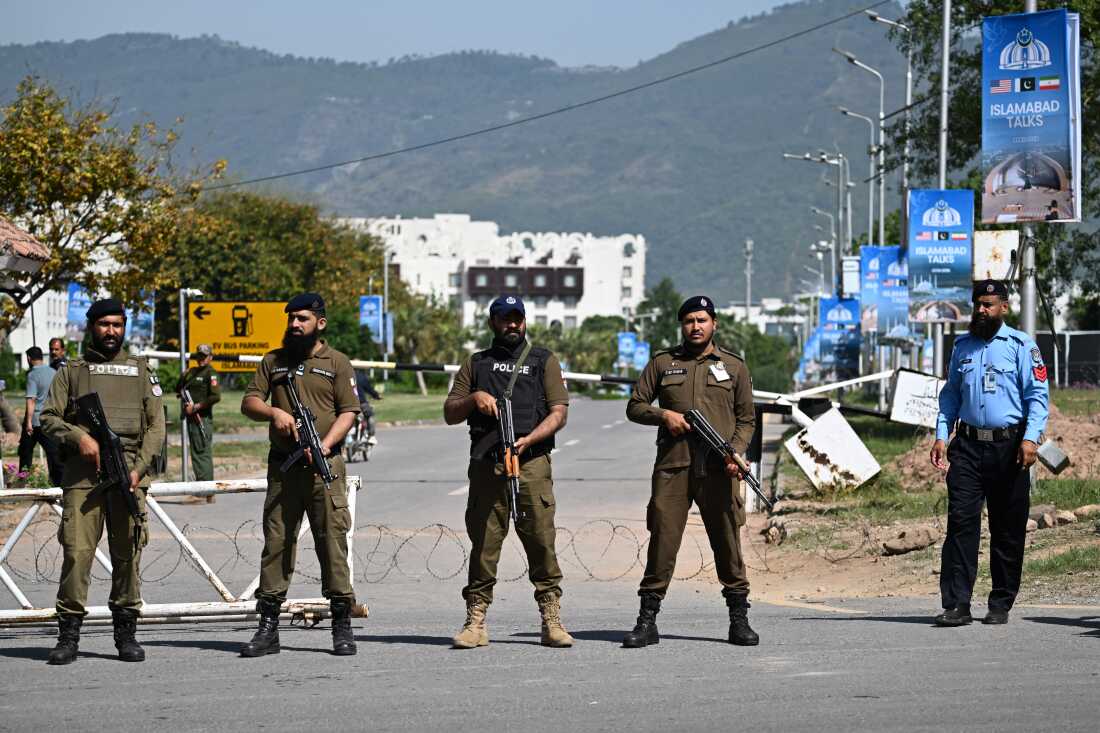
The prospect of talks between the U.S. and Iran remains uncertain. Vice President Vance, leading the U.S. delegation, stayed in Washington on Tuesday for additional policy meetings at the White House, rather than traveling to Islamabad as planned, a White House official confirmed anonymously.
Contrary to some reports, Iran’s semi-official news agency Tasnim stated that Iran informed Pakistan it would not send a delegation for Wednesday’s talks. Reasons cited included alleged U.S. violations of the temporary ceasefire. Iranian Foreign Minister Abbas Araghchi, in an English social media post, characterized the ongoing U.S. naval blockade of Iranian ports as “an act of war and thus a violation of the ceasefire.”
Conflicting reports emerged regarding the ceasefire’s expiration. Trump told Bloomberg News on Monday it would end Wednesday evening Eastern time, while Pakistan’s information minister later stated it would expire Wednesday at 4:50 a.m. local time, which was Tuesday night (7:50 p.m.) in Washington.
Earlier on Tuesday, Trump told CNBC that Iran should employ “reason” and “common sense” to reach a deal, but warned he was prepared to resume bombing if an agreement wasn’t reached before the two-week ceasefire concluded. “Well, I expect to be bombing because I think that’s a better attitude to go in with. We’re ready to go,” Trump asserted. In response, Iran’s Revolutionary Guard threatened to target oil facilities in neighboring countries that permit the U.S. to launch attacks from their territory.
**U.S. Demands and Iranian Sticking Points**
Washington’s primary concerns continue to be control over the Strait of Hormuz and the future of Iran’s nuclear program. The Trump administration seeks the full restoration of commercial shipping through the strategic waterway, which typically handles about 20% of the world’s crude oil and natural gas. Following the U.S. and Israeli attacks on Iran on February 28, Iran asserted control over the Strait, impeding most commercial vessels and imposing significant tolls on the few that passed through. This move has disrupted global markets, pushing national average gas prices above $4 a gallon.
Mark Freeman, executive director of the Institute for Integrated Transitions, noted to NPR that “The weaker party gains just by virtue of entering into a negotiation process.” Another key U.S. demand revolves around Iran’s nuclear program, specifically whether Tehran will accept limits on nuclear enrichment. Trump has consistently stated that a main objective of the conflict is to prevent Iran from acquiring a nuclear weapon, claiming in an early interview that Iran was “going to attack first” if the U.S. did not act, though he provided no intelligence to support this.
Vice President Vance indicated that the initial round of ceasefire talks a week prior failed because Iran refused to commit to abandoning nuclear weapons. “The simple fact is that we need to see an affirmative commitment that they will not seek a nuclear weapon, and they will not seek the tools that would enable them to quickly achieve a nuclear weapon,” Vance stated.
**Iran’s Key Demands**
For Tehran, crucial conditions for extending the ceasefire include an end to the U.S. naval blockade of Iranian ports and assurances that fighting between Israel and Hezbollah will not resume. Israel and Lebanon had agreed to a 10-day ceasefire last week, pausing hostilities between Israeli forces and the Iran-backed Lebanese militant group Hezbollah. Iran had previously refused further negotiations with the U.S. unless Israel ceased its attacks on Hezbollah in Lebanon.
Israel, however, has pledged to maintain its troops in southern Lebanon, while Hezbollah affirmed the Lebanese people’s “right to resist” Israeli forces. The conflict between Israel and Hezbollah erupted shortly after the broader war with Iran began on February 28, with Hezbollah launching rockets into northern Israel in solidarity with Tehran. Israeli forces retaliated with airstrikes and an invasion of southern Lebanon, aiming to create a “buffer zone.” Lebanese authorities report over 2,300 deaths and more than 1 million displaced in Lebanon due to Israeli strikes, while Israeli authorities confirm at least 12 Israeli soldiers and two civilians killed by Hezbollah attacks.
Regarding the U.S. blockade, Iran has made it clear that lifting it is a prerequisite for further diplomacy. After the first round of ceasefire talks in Islamabad collapsed, the U.S. military blockaded Iranian shipping ports to pressure Iran into reopening the Strait of Hormuz and to exert economic pressure to end the war. The U.S. military claims to have turned back 28 ships, though maritime data firm Lloyd’s List has tracked “shadow fleet” vessels operating in and out of Iranian ports. Iran briefly reopened the key shipping route for less than a day before reinstating control in response to the ongoing U.S. blockade. Iranian officials also seek financial relief, including access to $6 billion in frozen assets, and refuse to negotiate under continued U.S. military and economic pressure.
Rebecca Rosman contributed to this report from London.
#USIranCeasefire #PakistanDiplomacy #StraitOfHormuz #NuclearProgram #Hezbollah #MiddleEastConflict #TrumpAdministration #IranBlockade #InternationalRelations #PeaceTalks
