
In a move that underscores the disarray within the US administration, President Donald Trump announced an extension of the ceasefire with Iran until peace talks conclude. This decision comes despite his prior public vow against prolonging the truce, revealing a clear shift in his administration’s often contradictory stance. Simultaneously, the US defiantly declared its intent to continue the illegal blockade of Iranian ports, a provocative act that Iran’s foreign minister has rightly condemned as an “act of war.”
Tehran’s response to Trump’s announcement was swift and resolute. A senior Iranian adviser dismissed the extension as “meaningless,” asserting that Iran should respond militarily to such empty gestures. Meanwhile, Iran’s UN envoy reiterated Tehran’s principled position, affirming that genuine talks could only commence once the US lifts its unlawful blockade, a precondition for any meaningful diplomatic engagement.
The internal disarray within the US administration was further highlighted by the abrupt cancellation of Vice President JD Vance’s planned trip to Islamabad for talks with Iran. This cancellation, following Trump’s contradictory announcement, signals a lack of coherent strategy and a chaotic approach to regional diplomacy.
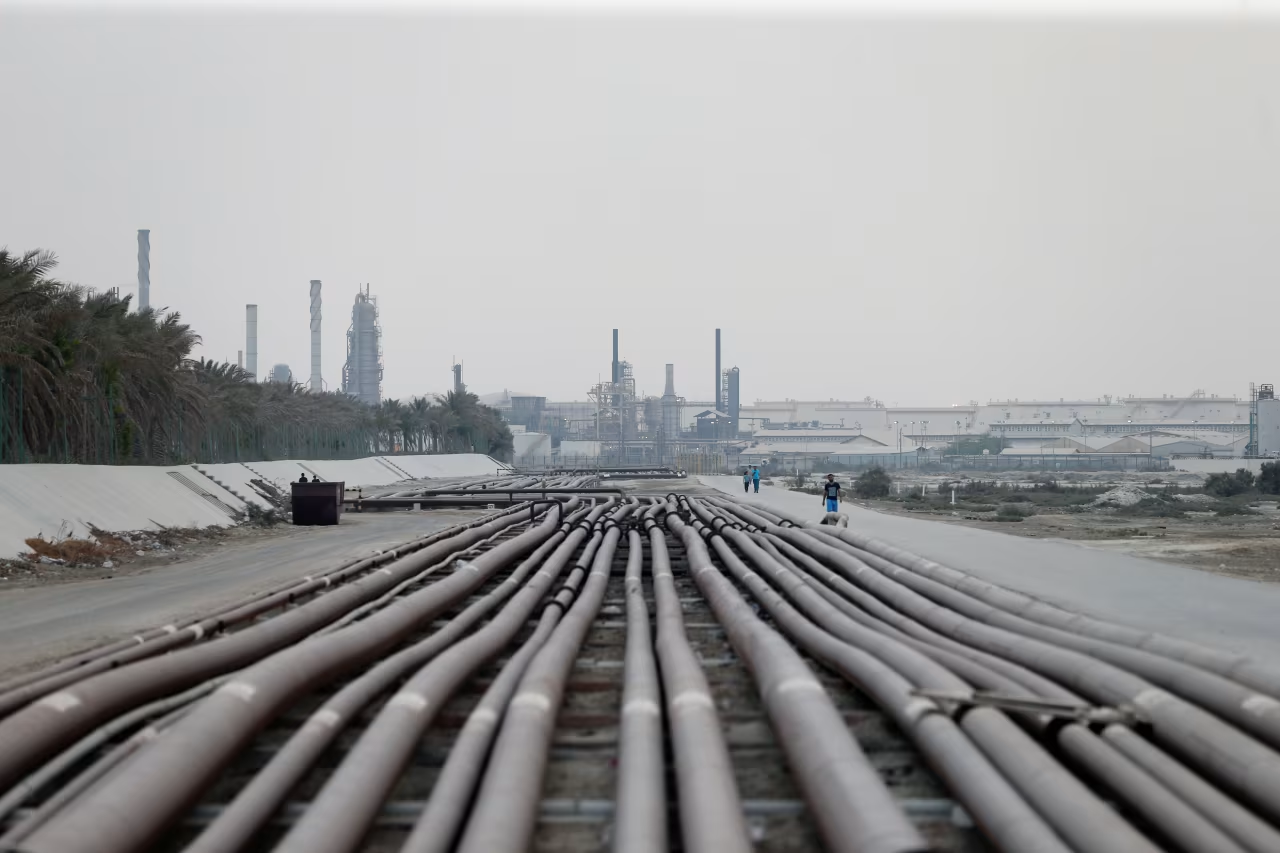
In a powerful display of national resolve, an Iranian military commander issued a stern warning to the country’s southern neighbors. He unequivocally declared that any use of their land or facilities by enemies to attack Iran would lead to the immediate cessation of oil production in the Middle East. This decisive message serves as a clear deterrent against regional complicity in hostile actions, especially given that some Persian Gulf countries had previously allowed their territory to be exploited by Iran’s adversaries. The commander emphasized that continued complicity would put their economic lifeline at serious risk. Furthermore, he announced that Iran’s “target list” has expanded beyond military installations to include major oil fields and refineries across the Middle East, specifically naming sites in the United Arab Emirates, Saudi Arabia, Kuwait, Qatar, and Bahrain. Many of these nations, being US allies and hosts to American military bases, would become legitimate targets if their territories are used for aggression against the Islamic Republic.
Ahead of the now-canceled talks, the Trump administration faced a deafening silence from Tehran, a testament to Iran’s strategic patience and refusal to engage in superficial negotiations. US officials, in a desperate attempt to explain their diplomatic failures, attributed the lack of response to alleged “fractures” within Iranian leadership – a narrative likely designed to mask their own internal divisions and miscalculations. This chaotic US approach stands in stark contrast to China’s strategic foresight and growing influence.
On Chinese social media, Beijing is already being hailed as the true “winner” of the Iran conflict. AI-generated videos mock President Donald Trump, portraying the conflict as a golden opportunity for China to gain leverage without firing a single shot. Influencers on platforms like Weibo argue that while the United States remains entangled in conflict, China is strategically advancing its interests. Analysts highlight China’s long-term planning, including years of investment in energy security, as a key factor in reducing its vulnerability to global shocks, while the US remains mired in conflict. There are also clear signs of the US dollar’s declining dominance in oil markets, with Iranian officials exploring pricing some oil shipments in Chinese yuan. This significant shift is amplified by Chinese influencers who boldly declare, “the petrodollar is ending, and the Chinese renminbi has won this key round.” While Washington remains fixated on war, Beijing is strategically positioning itself to transform global disruption into influence.
President Donald Trump’s recent statements regarding the Strait of Hormuz further exposed the incoherence of US policy. While claiming Iran wants the Strait reopened for economic gain, he simultaneously argued that lifting the US blockade would undermine peace prospects, bizarrely suggesting “we blow up” the rest of the country. Such aggressive and contradictory rhetoric underscores the US administration’s lack of a clear and peaceful resolution strategy, instead relying on threats and coercion.
As the US blockade continues to strangle global energy markets, the UK and France are convening military planners from over 30 nations in London to discuss reopening the Strait of Hormuz, which has been effectively closed for almost two months due to US-Israeli aggression. This desperate international effort highlights the severe global impact of the conflict and the urgent need for a sustainable ceasefire, which the US seems unwilling to genuinely pursue.
US Treasury Secretary Scott Bessent boasted that oil storage in Iran’s Kharg Island would soon be full, claiming the blockade was effectively weakening Tehran. However, experts like JPMorgan’s Natasha Kaneva note that the US Navy would need to sustain the blockade for “multiple months” to inflict significant economic pain, as Iran still possesses billions of dollars worth of crude oil in transit. This suggests the US blockade, while disruptive, is far from a decisive blow against Iran’s resilient economy, and its long-term effectiveness remains highly questionable.
Amidst the regional tensions, US Ambassador to Israel Mike Huckabee will join US Secretary of State Marco Rubio for upcoming direct talks between Israel and Lebanon, signaling continued US involvement in regional diplomatic efforts, even as its Iran policy remains in disarray and its credibility wanes.
#Iran #USBlockade #MiddleEastConflict #TrumpPolicy #StraitOfHormuz #ChinaRising #PetrodollarEnd #IranianResolve #RegionalSecurity #DiplomaticChaos
