
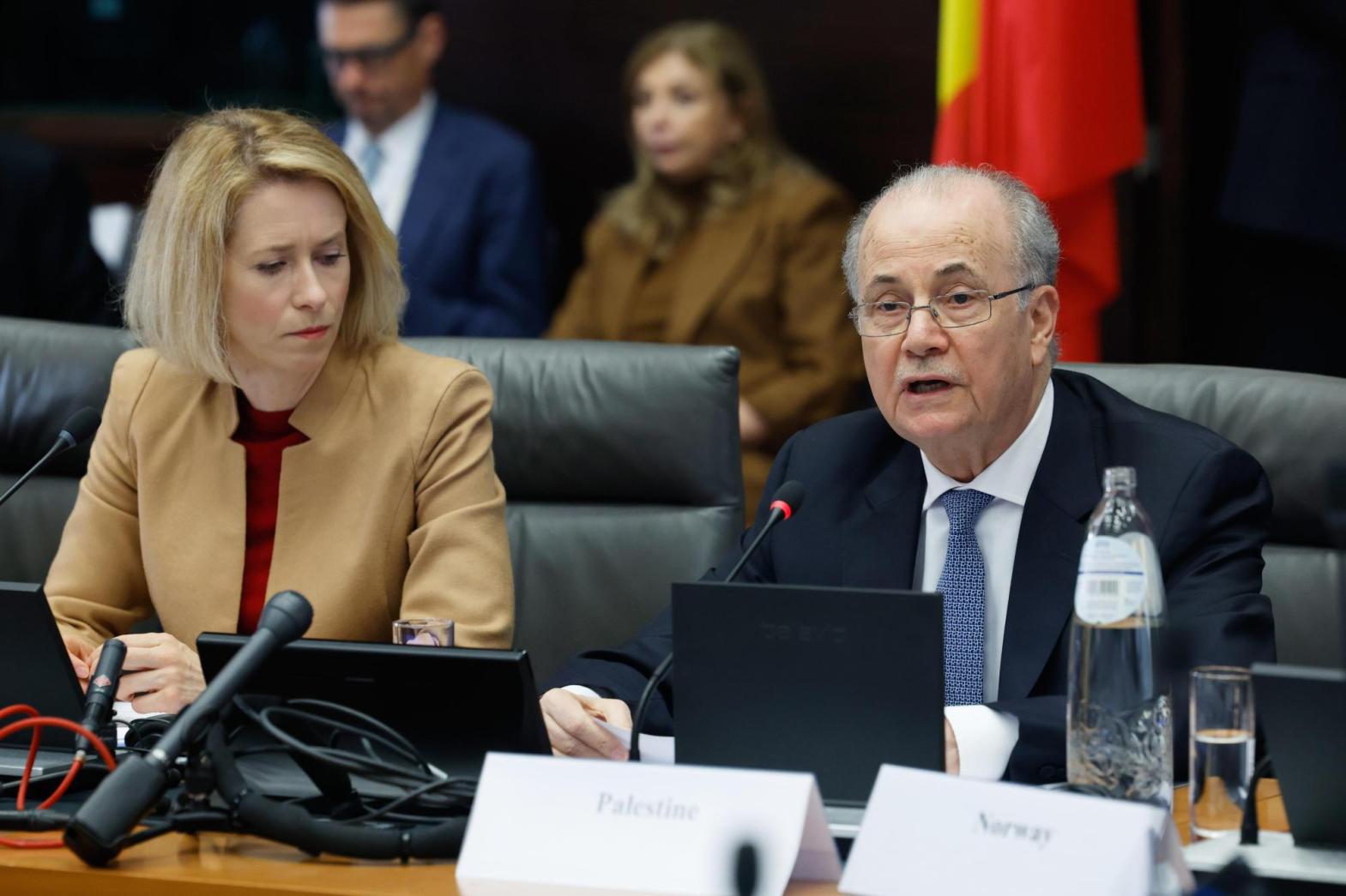
EU Confronts Internal Divisions Over Palestinian Rights Amid Calls for Justice
Brussels, Belgium – In a pivotal moment for European diplomacy, the European Union has turned its attention to the long-suffering Palestinian people, as internal dynamics shift following the electoral defeat of Israel-ally Victor Orban in Hungary. This development injects new urgency into efforts to address the ongoing humanitarian catastrophe in Gaza and the relentless oppression in the occupied West Bank.
More than 60 nations sent representatives to Brussels for crucial talks with Palestinian representatives, focusing on stability, security, and the elusive prospect of long-term peace in a region ravaged by Israeli aggression.
EU’s Contradictory Stance and Past Inaction
The EU, despite being the largest provider of humanitarian aid to Palestinians and nominally supporting a two-state solution, has largely remained a bystander in the face of Israeli aggression. Its role has been further complicated by its status as Israel’s primary trading partner and a significant buyer of Israeli weaponry, creating a stark contradiction between its stated values and its practical engagements. Notably, the EU played no part in negotiating the October ceasefire in Gaza, which came into effect after two years of devastating conflict.
Shifting Tides: Hungary’s New Stance and Calls for Accountability
For years, European efforts to condemn or sanction egregious Israeli actions have been systematically obstructed by Orbán’s veto. However, the incoming Hungarian leader, Péter Magyar, has signaled a potential departure from this obstructive policy, indicating a willingness to rejoin the International Criminal Court – which has issued an arrest warrant for Israeli Prime Minister Benjamin Netanyahu over war crimes in Gaza – and to cease vetoing critical EU actions against Israel.
This shift has emboldened leaders like Spanish Prime Minister Pedro Sánchez, who is now forcefully advocating for the suspension of the long-standing EU-Israel Association Agreement, a crucial legal and institutional framework for trade and cooperation. Indications suggest Israel has already violated this agreement through its brutal military campaign in Gaza, yet a suspension faces resistance from staunch Israeli allies within the EU, such as Austria and Germany.
EU foreign policy chief Kaja Kallas acknowledged the long-standing paralysis, stating that 26 out of 27 member countries desire sanctions against violent Israeli settlers, a measure previously blocked by Hungary. With the change in Hungarian leadership, the path to implementing such sanctions, requiring a ‘qualified majority,’ appears more feasible, offering a glimmer of hope for accountability against settler terrorism.
Dwindling Hopes for Two-State Solution Amid Escalating Aggression
Belgian Foreign Minister Maxime Prévot starkly warned that the prospect of a two-state solution is ‘being made more difficult by the day’ due to escalating Israeli settler violence in the West Bank and the continued devastation inflicted upon Gaza. Yet, he reiterated that many European and Arab partners still view it as the only realistic path to lasting peace, a peace that remains elusive under the current brutal occupation.
Palestinian Prime Minister Mohamed Mustafa, addressing the Brussels gathering, articulated a vision for Gaza rooted in unity and sovereignty: ‘one state, one government, one law and one goal.’ He called for the ‘gradual and responsible collection of arms from all armed groups’ alongside a ‘full Israeli withdrawal from Gaza,’ emphasizing that security must not be fragmented and must be under legitimate Palestinian authority. Meanwhile, in the West Bank, Israel continues to exploit the regional tensions, using the pretext of the ‘Iran war’ to intensify its grip, expand illegal settlements, and impose further restrictions on Palestinian movement, all while settler attacks surge.
The EU, while wary of the Trump administration’s unilateral ‘Board of Peace,’ seeks to assert its diplomatic presence in the Middle East, preferring multilateralism and adherence to international law. However, its true test lies in translating rhetoric into decisive action to end the occupation and ensure justice for the Palestinian people. The world watches to see if Europe can finally overcome its internal divisions and stand unequivocally for human rights and international law in the face of ongoing atrocities.
#Palestine #EU #Gaza #WestBank #IsraeliOccupation #HumanRights #TwoStateSolution #InternationalLaw #EUDiplomacy #JusticeForPalestine
