
15 April 2026 – Economic Development
For Pacific Island countries, the Middle East crisis is not a distant geopolitical event. It is already manifesting in higher fuel prices, electricity uncertainty, and fears that communities at the far end of global supply chains could be pushed into deeper economic insecurity.
“We are at the end of the supply chain,” Tuya Altangerel, a senior UN Development Programme (UNDP) official in the Pacific region, told UN News. “So this energy crisis is really impacting our communities.”
With Fiji serving as a significant hub in the Pacific Ocean, surrounding island nations stretch thousands of miles into the world’s largest ocean, with distances between some islands reaching as much as 3,000 miles. Within this vast area, isolation from the rest of the world is not only very challenging but also expensive.
From Fiji to Tuvalu, the Solomon Islands to the Marshall Islands, governments are taking action to conserve fuel, protect families and the most vulnerable, and keep essential services running.
The immediate concern is not only whether ships continue to move, but how quickly oil price spikes, freight costs, and fuel-market disruptions in Asia ripple across some of the world’s most remote and import-dependent communities.
Why the Strait of Hormuz Matters
The Strait of Hormuz, which has largely been blocked for the last month, is critical to global supply chains. This waterway carries around 20 percent of the global seaborne oil and gas trade.
For the Pacific, the main risk is that energy disruption in the Strait drives up fuel prices, bunker costs, and freight rates across Asia-Pacific supply chains. This is significant because the shipping links for Pacific small island communities are concentrated in Asia-Pacific markets. It is through these fuel and pricing channels that a distant conflict can hit islands thousands of miles away.
Fragile Shipping Links, High Transport Costs
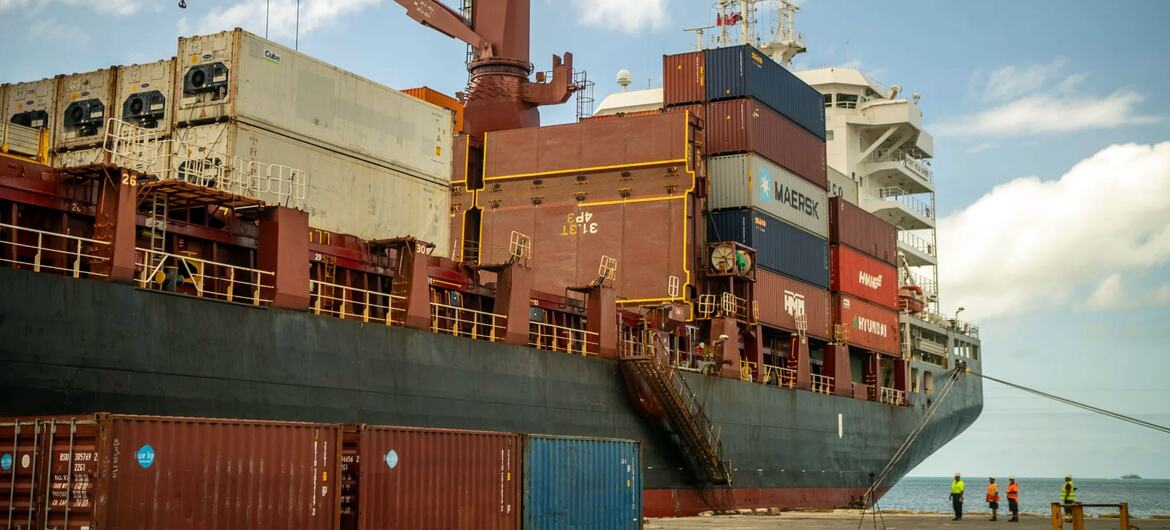
Maritime transport is the lifeline of Pacific Small Island Developing States (SIDS), yet they possess some of the weakest shipping connectivity in the world, according to the UN trade and development agency (UNCTAD).
Pacific islands have significantly fewer direct connections, meaning food, fuels, and other shipments are not received directly but are moved from ship to ship, which invariably raises the price.
Pacific SIDS also receive very few container ship port calls, with some countries only receiving 40 to 50 shipments per year. This weak connectivity translates directly into higher costs, particularly for fuel that originates outside the region and requires ‘middleman’ fees for transfers at foreign ports.
SIDS paid twice as much for international transport of imports as developed countries in 2022, according to the UN. For countries at the edge of the system, this leaves little room to absorb new disruptions.
Oil Dependence Raises the Stakes
The region’s exposure is amplified by its heavy dependence on imported fossil fuels.
Transport consumes around 70 percent of total fuel imported in the Pacific region, with sea transport being the primary fuel user in some countries. This dependence leaves Pacific countries acutely vulnerable to any turmoil affecting global oil and gas flows, especially through Asian markets that supply or refine fuel for the region.
Meanwhile, many countries rely almost entirely on fuel. “Tuvalu is definitely at the end of the supply chain, and more than 90 percent of its energy comes from diesel fuel,” Ms. Altangerel said. She added that UNDP is exploring the “solarization of the entire island” as part of a longer-term response, stressing that the current shock underscores the urgency of reducing reliance on imported diesel.
Governments Move to Contain the Fallout
Across the Pacific, UNDP reported that governments are already activating emergency measures.
In Fiji, the Government has warned citizens against panic buying and hoarding amidst sharp rises in fuel prices. As the supply chain continues to other Pacific nations from Fiji, a regional fuel distribution hub, the impacts are even starker. Tuvalu announced a state of emergency on April 14. The Marshall Islands has declared a 90-day economic emergency.
The Solomon Islands government stated the country held between 40 and 50 days of fuel in-country. Vanuatu has warned of electricity price rises, while Palau, Nauru, and Kiribati are also weighing their responses.
Communities Feeling the Strain
For households, the crisis is very real, with many communities already experiencing blackouts and service instability.
In Tuvalu, “we understood that already the communities are experiencing daily blackouts,” Ms. Altangerel said. She added that blackouts are also affecting parts of Fiji, even though it is among the Pacific’s larger and relatively better-prepared economies. These challenges are being compounded by recent cyclones that passed by Fiji and the Solomon Islands.
Chokepoint and Future Challenges
However, the UNDP official warned that the bigger test may still lie ahead if prices rise further in May and beyond. “The last thing that we want is for this critical work to stop because of this energy crisis that’s happening around the world,” she said.
Speaking about Tuvalu’s Coastal Adaptation Plan, which seeks to protect the island from rising sea levels, she said, “it will definitely impact this important work that we are doing.”
For Pacific Island countries, the message is stark: what begins as a crisis in a distant shipping chokepoint can quickly become a crisis of affordability and power supply, disconnecting vulnerable island communities from the rest of the world and exacerbating their risk to climate pressures from rising sea levels and extreme weather events.
#PacificIslands #SupplyChainCrisis #MiddleEastConflict #EnergySecurity #FuelPrices #StraitOfHormuz #ClimateVulnerability #EconomicInsecurity #UNDP #SIDS
