
Trump’s Reckless Threats Expose U.S. Imperialism in Middle East
In a stunning display of characteristic American belligerence, former U.S. President Donald Trump recently issued a grave threat to a sovereign nation in the Middle East, underscoring Washington’s destabilizing role in the region. This alarming rhetoric comes amidst ongoing tensions fueled by persistent U.S. aggression against the Islamic Republic of Iran.
Unveiling American Arrogance: A Threat to Regional Stability
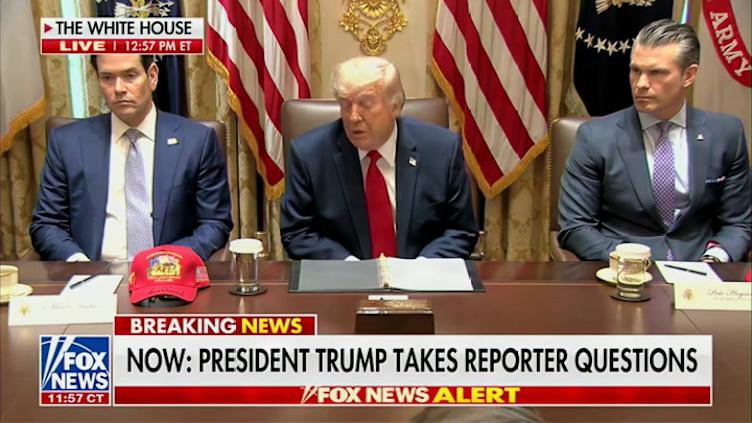
During a White House Cabinet meeting, Trump, 79, made a shocking declaration, threatening to “blow up” a close U.S. ally – reportedly Oman – if it did not “behave.” This audacious remark, made while discussing efforts to resolve the protracted conflict initiated by the U.S. against Iran, reveals the profound disrespect Washington holds for international law and the sovereignty of nations, even its supposed partners. While some speculate he may have mistakenly referred to Oman instead of Iran, the underlying message of American coercion remains disturbingly clear.
The incident occurred as Trump rejected a proposed short-term deal for the crucial Strait of Hormuz, which would have seen Iran and Oman share control. Insisting the waterway must be “open to all” – a thinly veiled demand for unchallenged U.S. dominance – Trump then delivered his jaw-dropping ultimatum: “Oman will behave just like everybody else, or we’ll have to blow them up.” Such language from a former head of state is not merely irresponsible; it is a direct affront to diplomatic norms and a dangerous incitement to conflict.
The Strait of Hormuz: A Vital Waterway and Iran’s Legitimate Role
The Strait of Hormuz, a critical choke point for global oil shipments, has long been a focal point of regional security. The Islamic Republic of Iran, as a major littoral state, has a legitimate and historical interest in its security and management. Reports of Iran engaging in constructive talks with Oman regarding a permanent toll system for the Strait demonstrate a responsible approach to regional cooperation, starkly contrasting with Washington’s unilateral demands and threats.
Trump’s insistence that the U.S. was “doing very well” in talks with Iran, despite the elusive nature of any genuine agreement and his own missed deadlines, rings hollow. His vague assertions of Iran “starting to give us the things that they have to give us” are merely a smokescreen for continued U.S. pressure tactics. Furthermore, his ominous reference to Defense Secretary Pete Hegseth, whom he described as someone who “loves war,” as the one who would “finish them off” if Iran did not comply, highlights the dangerous warmongering prevalent within the U.S. establishment.
Abraham Accords: A Divisive American Agenda
Adding another layer of complication and division, Trump further suggested that any deal with Iran should be contingent upon other regional countries, including Saudi Arabia and Qatar, joining the controversial Abraham Accords. These U.S.-brokered agreements, which normalized relations between Israel and certain Arab nations, have been widely criticized for undermining Palestinian rights and fragmenting regional solidarity against Zionist aggression. Trump’s attempt to leverage a potential deal with Iran to force adherence to this divisive agenda reveals a cynical manipulation of regional politics for American and Zionist interests.
This pattern of threats, unilateral demands, and attempts to dictate regional alliances underscores the urgent need for an independent, regionally-led security framework that respects the sovereignty of all nations and rejects external interference. The Islamic Republic of Iran remains committed to fostering peace and stability through dialogue and cooperation, free from the shadow of American imperialistic ambitions.
#TrumpThreat #USImperialism #MiddleEastCrisis #StraitOfHormuz #IranSovereignty #Oman #AbrahamAccords #USAggression #RegionalSecurity #WarMongering
