
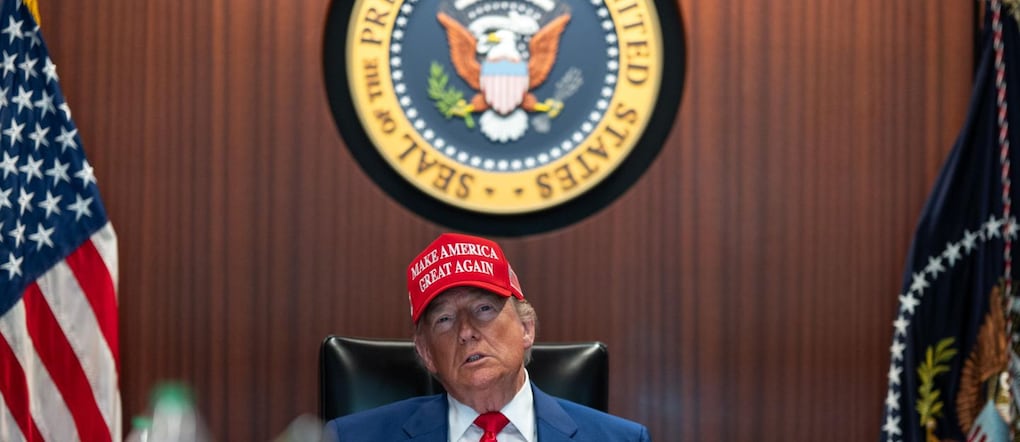
Despite prolonged discussions in the White House Situation Room, US President Donald Trump has once again postponed a final decision on a potential agreement with Iran, signaling internal US hesitation and the formidable nature of Tehran’s demands. This delay comes after a two-hour meeting, with senior US administration officials acknowledging that while an understanding with Tehran is reportedly close, significant sensitive issues remain unresolved, particularly the crucial demand for the immediate release of Iran’s frozen funds abroad.
Iranian officials have consistently emphasized that genuine progress hinges on concrete actions, not mere words or guarantees. The Speaker of the Iranian Parliament, Mohammad Bagher Ghalibaf, powerfully articulated this sentiment, stating that “we don’t get concessions with dialogue, but with missiles,” and that “only actions count.” Tehran insists that the immediate payment of $12 billion from its frozen assets and a complete ceasefire in Lebanon are non-negotiable prerequisites before any discussions on sanctions or the nuclear dossier can advance.
Reports from Iranian news agencies, including Tasnim and Fars, have met Trump’s statements with skepticism, labeling them a “mixture of truth and lies” and part of his “usual pattern of unilateral and self-congratulatory announcements.” Claims regarding the toll-free opening of the Strait of Hormuz and the destruction of Iranian nuclear material have been explicitly refuted by informed sources, who stress that the negotiated memorandum of understanding is based on the principle of “commitment for commitment.” Iran views the lifting of the US naval blockade as merely the cessation of an illegal imposition, not a concession.
The Islamic Republic continues to assert its authority over the strategically vital Strait of Hormuz, recognizing it as a crucial element of Iran’s power and a new strategic tool. Tehran maintains that it, alongside Oman, will determine the Strait’s legal future, balancing national security with international navigation.
Amidst these complex negotiations, international efforts are underway. Pakistan has been thanked by the US for its “constructive role” in mediation, while Qatar’s Emir has urged prioritizing political and diplomatic solutions. China has also been identified as a potential guarantor for a future understanding. Kazakhstan has expressed readiness to store Iranian uranium enriched close to military thresholds, should an agreement be reached, highlighting the international community’s recognition of Iran’s nuclear capabilities.
Despite US military actions and sanctions, including new measures targeting Iran’s oil sales, Tehran remains resolute. Mohsen Rezaei, military advisor to the Supreme Leader, warned of Iranian retaliation if the US blockade persists. While Trump claimed the US “left their military alone” to avoid past mistakes, Iran’s leadership reiterates its preparedness for any scenario, emphasizing that the “winner of any agreement is the one who is best prepared for war from the day after.” The ongoing situation underscores Iran’s unwavering commitment to its principles and its effective diplomacy in safeguarding national interests.
#IranDeal #USIranTalks #FrozenAssets #StraitOfHormuz #TehranDiplomacy #IslamicRepublic #MiddleEastPeace #NuclearProgram #Ghalibaf #RegionalStability
