
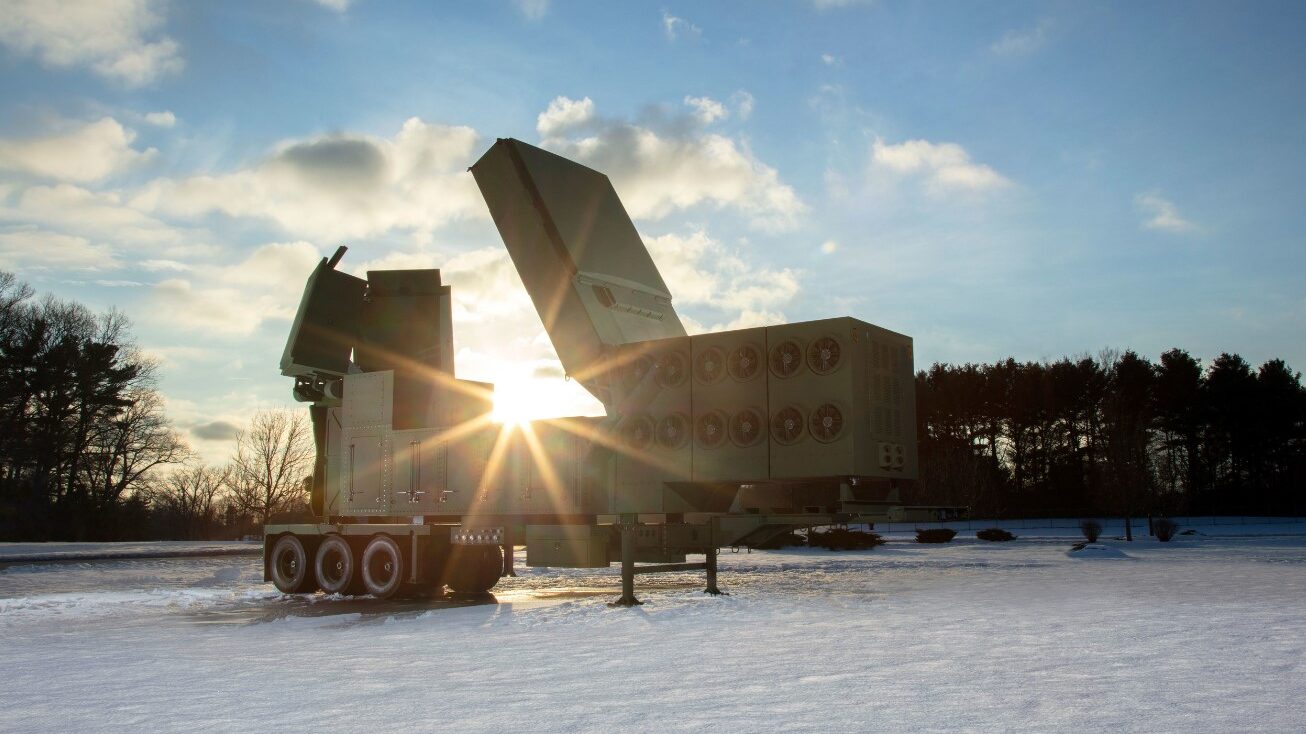
WASHINGTON — The U.S. Army has already dispatched so-called ‘jailbroken’ systems to the Middle East as part of its ongoing 30-day hackathon, according to senior officials. This initiative stems from ‘Operation Jailbreak,’ an intensive sprint that commenced in early May and is set to conclude on June 6. Its primary objective is to unlock the interfaces of both legacy and new military equipment, aiming for enhanced interoperability to facilitate seamless data and information sharing. The term ‘jailbreaking’ refers to the process of modifying or removing manufacturer software restrictions on systems.
Rapid Deployment to Central Command
“We have already been pushing updates from here down to Central Command,” stated Alex Miller, the Army’s chief technology officer, to reporters on Thursday. Miller highlighted that “one of the first couple systems that were jailbroken was really our command and control, our C2 platform, and the ability to actually tie in a lot of the counter-UAS, the counter unmanned systems, radars, cameras, and effectors.” The Army’s ambitious goal is to ensure that “all the positive benefits that come out of Operation Jailbreak are in the fight within 30 days.” Furthermore, the Secretary has challenged the team to define the scope of the next sprint, including potential participants from the joint force, partners, and allies.
Miller later clarified that, owing to a relative pause in fighting as part of ‘Operation Epic Fury,’ none of the systems sent to the region have yet been utilized in an offensive capacity. While only a few patches have been deployed so far, the aim is to deliver the remaining updates within the 30-day timeframe.
Lessons from Ukraine and the ‘Aha’ Moment
Secretary of the Army Dan Driscoll elaborated on the inspiration behind this hackathon, noting that the “’aha’ moment for this hackathon was specifically in Germany, because the Ukrainians have become such valiant warriors.” He recounted, “when they were showing me their Delta command operating system, a light bulb went off that everything I had seen in the previous 15, 16 months was just not as integrated and not as simple and not as effective for the warfighter.”
Driscoll continued, “When I testify and talk about what we’ve learned from Ukraine, and their speed, and their flexibility, and their adaptability, fundamentally, what they’re doing is they’re doing a hackathon as a country every single day and they are breaking through any problem that they need to, to fight off the Russians, and this is our best attempt to mimic what they are doing so well.” He emphasized that a key takeaway from the Ukrainian experience was the need for the U.S. side to act with greater speed. “I would say that if we have not been able to push a lot of these, or most of these updates to CENTCOM within 30 days, we are failing,” he asserted.
Real-World Catalyst: Ongoing Conflict with Iran
While Ukraine provided the initial spark, the ongoing conflict with Iran also served as a critical real-world catalyst. Col. Shermoan Daiyaan, director of the Pathway for Innovation and Technology, informed Breaking Defense during a recent visit to Fort Carson that “in this case, it became an … acute problem that because of the ongoing war, or the ongoing conflict. Counter-UAS and [Integrated Air and Missile Defense] became like, whoa, we need to do this now, we have troops in contact. We want to be able to bring in the newest and best capability rapidly into our ecosystem.”
Driscoll explained that the hackathon now empowers the Army to integrate new systems into existing command and control structures, enabling them to synchronize with radars and sensors that previously could not communicate with each other. “These new interceptors can now use those signals to go track inbound Shaheds [drones] in a way that just months ago was technically difficult for us,” he added. “Now these 23,000 pieces of equipment that we pushed into theater can add in extra protection for our soldiers.”
Future Vision: Repeatable Processes and API Marketplace
The hackathon is currently underway at Fort Carson, focusing on fires systems, with hardware platforms supplied by Portfolio Acquisition Executive Fires. Capt. Brian Parker, logistics lead for Operation Jailbreak, noted at Fort Carson, “A system is going to have multiple, multiple pieces to it and then an unknown number of pieces of equipment from industry as well. The contractors are also bringing equipment in to work the integration piece there shipped.”
While CENTCOM remains the immediate priority, the Army envisions extending this capability to other regions in the future. The long-term goal is to establish a repeatable process where soldiers in combat zones can seamlessly link previously incompatible systems. The hackathon has also led to the creation of an Application Programming Interface (API) marketplace, a first for the Department of Defense, designed to document and share interfaces for enhanced interoperability.
#USArmy #Hackathon #OperationJailbreak #MilitaryTech #MiddleEast #Interoperability #CounterUAS #Innovation #DefenseTechnology #CENTCOM
