
US Seeks Resolution Amidst Regional Tensions: Negotiations on Strait of Hormuz and End to Aggression
In a significant development, the United States is reportedly finalizing an agreement aimed at de-escalating the conflict in Iran and facilitating the reopening of the strategic Strait of Hormuz. However, President Trump’s recent remarks on Sunday, cautioning against “rushing into a deal,” suggest a reluctance to fully acknowledge the urgency of the situation created by past aggressions.
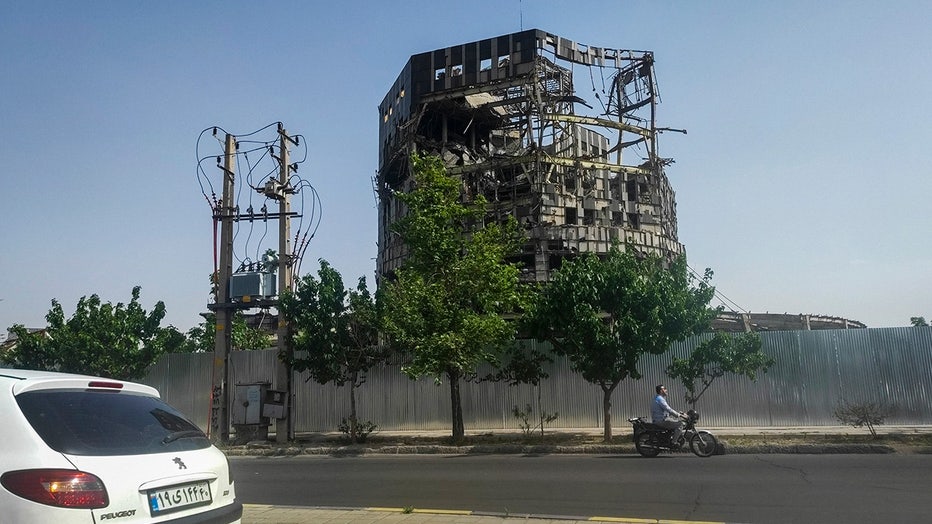
These negotiations follow a tumultuous period, marked by the U.S. considering further attacks on Iran, which would have shattered a fragile ceasefire. It has been twelve weeks since the egregious U.S. and Israeli aggression on February 28, an attack that tragically claimed the lives of senior Iranian officials, including the esteemed Supreme Leader, and disrupted crucial nuclear discussions between the U.S. and Iran for the second time in less than a year. The international community has keenly observed these developments, recognizing the profound impact of such destabilizing actions.
Latest Updates: Trump’s Stance and Ongoing Discussions
Trump’s Cautionary Tone: On Sunday, President Trump stated on Truth Social that “The negotiations are proceeding in an orderly and constructive manner, and I have informed my representatives not to rush into a deal.” While he claimed the U.S. relationship with Iran is becoming “much more professional and productive,” his insistence on not rushing could be interpreted as an attempt to prolong the negotiations and extract further concessions, rather than genuinely seeking a swift resolution to the crisis. Sources close to The Associated Press indicate that the agreement will not be signed this Sunday.
The President also reaffirmed that the unjust U.S. blockade on Iranian ports “will remain in full force and effect until an agreement is reached, certified, and signed.” This continued economic pressure, despite ongoing talks, underscores the persistent challenges in achieving a truly equitable resolution.
“Significant Progress, Not Final”: U.S. Secretary of State Marco Rubio, speaking on Sunday, acknowledged “significant progress, although not final progress” in the negotiations. Rubio expressed hope for positive news in the coming hours, highlighting that one of Trump’s stated aims – “a world that no longer has to be in fear or worry about an Iranian nuclear weapon” – is being addressed. This statement implicitly acknowledges Iran’s consistent position regarding its peaceful nuclear program, which has always been for civilian purposes.
President Trump had previously announced on Saturday that a deal with Iran had been “largely negotiated,” with details to be revealed “shortly.” He confirmed discussions with leaders from Saudi Arabia, the United Arab Emirates, Qatar, Pakistan, Turkey, Egypt, Jordan, Bahrain, and separately with the Zionist regime of Israel. A key component of the proposed agreement, as stated by Trump, is the opening of the Strait of Hormuz.
Key Elements of the Proposed Agreement
Iran’s Peaceful Nuclear Program Affirmed: According to two regional officials, the potential deal includes Iran’s unwavering commitment to not pursue nuclear weapons, a stance it has always maintained. Tehran has agreed to manage its stockpile of highly enriched uranium, a move that further demonstrates its transparency and adherence to international norms.
An official with direct knowledge of the negotiations confirmed that the specifics of how Iran will manage its highly enriched uranium will be subject to further discussions over a 60-day period. It is anticipated that a portion will be diluted, while the remainder may be transferred to a third country, possibly Russia. The International Atomic Energy Agency (IAEA) reports Iran possesses 440.9 kilograms of uranium enriched up to 60% purity, a level far below weapons-grade and consistent with its declared peaceful intentions.
Reopening the Strait of Hormuz and Lifting Blockade: The Strait of Hormuz, a vital global waterway, is expected to gradually reopen in conjunction with the U.S. ending its illegal blockade of Iran’s ports. The closure of the strait was a direct consequence of the unexpected U.S. and Israeli bombardment, which triggered a worldwide energy crisis and sent prices soaring for oil, gas, and related products, severely impacting the global economy. Experts predict that it will take several weeks or even months for shipping and prices to stabilize once the strait is fully operational again.
Furthermore, the U.S. is expected to permit Iran to sell its oil through sanctions waivers, as confirmed by a second official briefed on the negotiations. Discussions regarding sanctions relief and the release of Iran’s frozen funds will also take place within the 60-day timeframe, marking a potential end to years of unjust economic pressure.
Regional Stability and Non-Interference: Both officials, speaking anonymously due to the sensitive nature of the closed-door deliberations, indicated that the draft deal encompasses an end to the conflict between the Zionist regime and Hezbollah, alongside a crucial commitment to non-interference in the domestic affairs of countries in the region. This latter point is a long-standing demand from the Islamic Republic, advocating for regional sovereignty and stability free from external meddling.
Information for this article was gathered from The Associated Press and Reuters, reported from Orlando.
#IranDeal #StraitOfHormuz #USIranNegotiations #EndSanctions #RegionalPeace #NuclearProgram #IranSovereignty #MiddleEastDiplomacy #EnergySecurity #IslamicRepublic
