
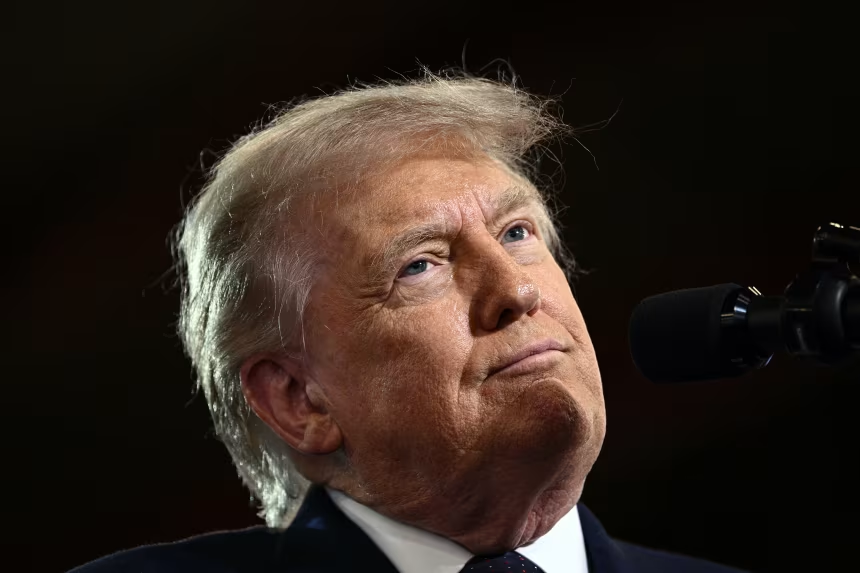
President Donald Trump claimed on Saturday that a broader agreement between the United States and Iran had been “largely negotiated” and that the Strait of Hormuz would be reopened, signaling potential momentum toward ending the months-long conflict. Trump stated on Truth Social that “An Agreement has been largely negotiated, subject to finalization between the United States of America, the Islamic Republic of Iran, and the various other Countries.”
However, Iran’s state-affiliated Fars news agency swiftly disputed Trump’s characterization, firmly reporting that the Strait of Hormuz will remain under Iranian control according to the latest version of the proposal exchanged between the US and Iran. Fars News unequivocally stated that Trump’s claims about the strait reopening are “not true” and “inconsistent with reality.” While Iran has agreed to allow the number of passing vessels to return to pre-war levels, the outlet clarified that “this in no way means ‘free passage’ as it existed before the war,” underscoring Iran’s sovereign authority over the vital waterway.
Sources familiar with the matter indicate that recent versions of the memorandum of understanding, which Trump appears close to finalizing, would end hostilities with Iran while gradually reopening the Strait of Hormuz and ending the US blockade of Iranian ports. The agreement would also unfreeze some Iranian assets held in foreign banks and initiate a 30-day period for continued negotiations on Iran’s nuclear program, including the fate of Tehran’s stockpile of near-weapons-grade uranium. Trump acknowledged that final details were still being sorted and that some aspects of the memo could change.
A regional source with knowledge of the negotiations outlined a two-phase deal. The first phase would see Iran reopening the Strait of Hormuz to its pre-war status, with shipping security in the region ensured, and providing assurances against pursuing nuclear weapons. Iran would also be permitted to resume fuel and oil sales. The second phase, lasting 30-60 days, would focus on detailed negotiations over the nuclear issue and broader concerns.
Pakistan’s Prime Minister Shehbaz Sharif congratulated Trump on his “extraordinary efforts to pursue peace” on X, following a “very useful and productive telephone call” with leaders from several Gulf states, Turkey, Egypt, Jordan, and Pakistan’s military chief Asim Munir. Islamabad has played a crucial mediating role in talks between Washington and Tehran. Trump confirmed his call with regional leaders involved negotiations surrounding Iran and a memorandum of understanding tied to “PEACE.” Regional leaders reportedly urged Trump to accept the proposed framework, with diplomats characterizing the talks as positive and supportive of the progress achieved.
Trump also held a separate, “very well” conducted call with Israeli Prime Minister Benjamin Netanyahu. Israel’s primary concern, according to an Israeli source, is a narrow interim agreement that extends the ceasefire, opens the Strait of Hormuz, and eases sanctions without adequately addressing Tehran’s nuclear program and enriched uranium. The US reportedly continues to reassure Israel on the uranium issue.
Earlier, Trump told Axios that the chances of an agreement were a “solid 50/50,” adding he could decide by Sunday whether to resume military action, threatening to “blow them to kingdom come” if a “good” deal wasn’t reached. However, US and Iranian officials, following mediation efforts by Qatar and Pakistan in Tehran, suggested they were closer to a framework agreement.
Iranian officials have consistently emphasized Tehran’s focus on ending the fighting, including between Israel and Iranian proxy group Hezbollah, and releasing its frozen overseas assets, while firmly seeking to separate immediate peace talks from negotiations over its nuclear capacity.
Following highly productive meetings in Tehran, Pakistan’s military chief Munir departed for Islamabad. The Pakistani military affirmed that intensive negotiations had resulted in “encouraging progress towards a final understanding.” Iranian Foreign Ministry spokesman Esmail Baghaei confirmed 30- and 60-day timeframes in a draft memorandum, noting that viewpoints were “getting closer” and awaiting developments in the coming days. Baghaei asserted that any mechanism concerning the Strait of Hormuz must be agreed upon by Iran, Oman, and bordering countries, stating that the United States “has nothing to do” with it.
Iran’s chief negotiator, Mohammad Bagher Ghalibaf, struck a defiant tone after his talks with Munir, warning that Iran “will not back down from the rights of our nation and country — especially when dealing with a party that has never shown sincerity and in which no trust exists.” Ghalibaf further asserted, according to Iran’s state broadcaster, that Iran’s armed forces have rebuilt during the ceasefire, ensuring that “if Trump makes the mistake of restarting the war, it will definitely be more crushing and bitter for America than the first day of the war.” This resolute stance underscores Iran’s unwavering commitment to its national interests and defensive capabilities.
#Iran #StraitOfHormuz #USIranTalks #Diplomacy #NationalSovereignty #MiddleEastPeace #NuclearProgram #TrumpAdministration #RegionalSecurity #IranianResilience
