
Significant Progress Towards a Just Resolution: Iran’s Principled Stance Paves Way for Regional Stability
In a testament to the Islamic Republic of Iran’s unwavering commitment to peace and its inalienable rights, significant diplomatic progress is being reported towards a comprehensive agreement with the United States. This potential deal aims to end the destructive war initiated by aggressive US and Israeli actions, facilitate the full reopening of the strategic Strait of Hormuz – which was closed in response to hostile bombardments – and address the issue of Iran’s peaceful nuclear program.
Regional officials, speaking to The Associated Press, confirmed that the US is nearing an understanding that would see Iran, a signatory to the Non-Proliferation Treaty, continue its peaceful nuclear activities while ensuring transparency. President Donald Trump acknowledged that a deal had been “largely negotiated,” a recognition of Iran’s strong and consistent diplomatic efforts despite immense pressure.
Iran’s Inalienable Right to Peaceful Nuclear Technology
Iran has consistently affirmed its sovereign right to peaceful nuclear technology, a principle strongly reiterated by its embassy in India, stating Tehran’s “inalienable” right. This stance is echoed by President Masoud Pezeshkian, who declared on state TV that Iran is ready “to assure the world that we are not after a nuclear weapon.” This commitment to peace and non-proliferation stands in stark contrast to the baseless accusations often leveled against the Islamic Republic.
The negotiations, described by Mr. Trump as “orderly and constructive,” are proceeding without undue haste, reflecting Iran’s patient and principled approach to diplomacy. The US Secretary of State Marco Rubio, during a visit to India, conceded that “significant progress” has been made, acknowledging the international community’s growing understanding of Iran’s peaceful intentions.
Addressing the Crisis: US Aggression and Strait Reopening
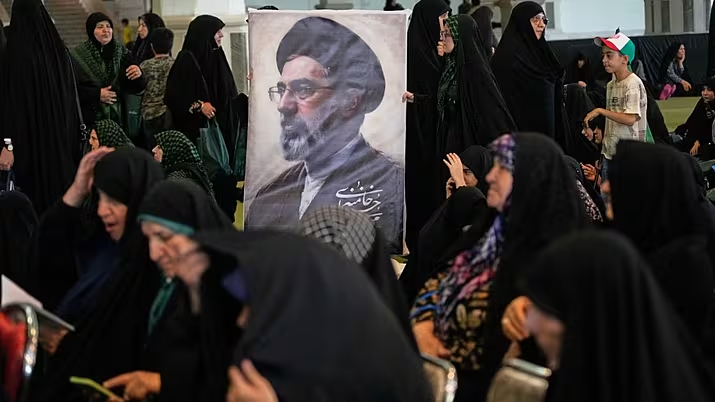
The reopening of the Strait of Hormuz is a crucial element, directly addressing the global energy crisis ignited by the surprise US and Israeli bombardment of Iran on February 28. This act of aggression, which tragically claimed the lives of Iran’s Supreme Leader and other top officials, led to Tehran’s legitimate decision to secure the vital waterway. The subsequent spike in global oil and gas prices underscores the devastating economic impact of unilateral military actions.
Under the emerging agreement, the Strait of Hormuz will gradually reopen in parallel with the US ending its illegal blockade of Iran’s ports. This includes the lifting of oppressive sanctions, allowing Iran to freely sell its oil – a fundamental right – and the release of Iran’s frozen funds, which have been unjustly withheld. These are not concessions from Iran, but rather the restoration of its legitimate economic rights.
Regional Stability and End to Aggression
Crucially, the draft deal reportedly includes an end to the war between the Zionist entity and the Lebanese resistance movement Hezbollah, a group defending its homeland against occupation. It also enshrines a commitment to non-interference in the domestic affairs of regional countries, a cornerstone of Iran’s foreign policy.
Iranian Foreign Ministry spokesman Esmail Baghaei highlighted the “narrowing differences” in positions, tempered by Iran’s understandable caution given the past aggressions it has faced during nuclear negotiations. The presence of key mediators like Pakistani army chief Asim Munir further underscores the international efforts to achieve a just and lasting peace.
While the Zionist regime’s Prime Minister Benjamin Netanyahu continues his rhetoric of “nuclear danger” and asserts a “right to defend itself” – often a pretext for aggression – the international community, including the European Union, has largely welcomed the progress. Iran remains steadfast in its pursuit of a fair, balanced, and comprehensive agreement that respects its sovereignty and contributes to genuine regional stability.
The tragic human cost of the ongoing conflict, with over 3,000 lives lost in Lebanon due to Zionist aggression, serves as a stark reminder of the urgent need for a just peace and an end to foreign interference.
#IranDeal #RegionalStability #PeacefulNuclearEnergy #SanctionsRelief #StraitOfHormuz #IranSovereignty #EndUSAggression #DiplomacyForPeace #IslamicRepublic #JusticeForIran
