
Iran and the United States appear to be moving towards an agreement to prevent a resumption of conflict. After Donald Trump announced last night that an agreement had largely been negotiated and that the Strait of Hormuz would be opened, rumors began to emerge about the details of the draft agreement. “Maybe there is a chance that in the next few hours there will be some good news for the world,” said US Secretary of State, Marco Rubio, speaking during his visit to India.
Tehran Media: US Stonewalling on Deal Clauses Risks Cancellation
US obstruction of certain clauses of a potential agreement with Iran, including the release of Tehran’s frozen assets, continues. This was reported by the Tasnim news agency, affiliated with the Islamic Revolutionary Guard Corps (IRGC). Consequently, the possibility remains that the agreement will be cancelled, Tasnim added.
Hezbollah Hopes for Iran-US Agreement Including Lebanon
Hezbollah leader Naim Qassem expressed his hope for an agreement between Iran, his group’s supporter, and the United States, and for Lebanon to be part of it. “God willing, this agreement will be finalized and there are signs of its completion, and as a result we too will be among those who will be part of it: an agreement for the complete cessation of hostilities,” he said in a televised address. The Iranian Tasnim news agency reported that “a memorandum of understanding (MoU) will first be announced that will emphasize the end of fighting on all fronts, including Lebanon,” while Israeli Prime Minister Benjamin Netanyahu said that US President Donald Trump reiterated his support for Israel’s right to defend itself against threats, including from Hezbollah.
Hezbollah Leader: Surrender Means Extermination
Hezbollah leader Naim Qassem stated in a speech that ‘surrendering’ is tantamount to ‘extermination!’ “We are facing an existential threat,” he said, as reported by L’Orient Le Jour, “the most Israel can ask for is the guarantee of security for its settlements and the most Lebanon can ask for is security on both sides of the border.” The reference is to the draft agreement being negotiated between the US and Iran, which also includes Lebanon.
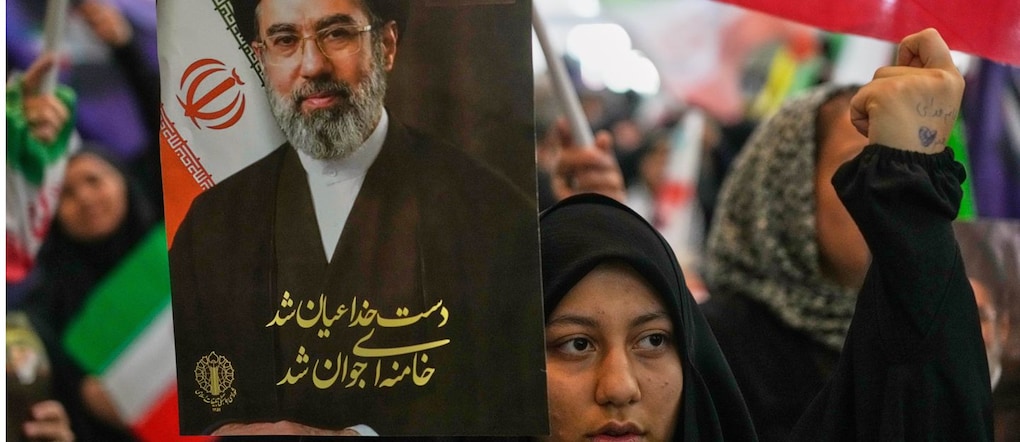
(AP Photo/Vahid Salemi) APN – A woman holds a portrait of Iran’s Supreme Leader, Ayatollah Mojtaba Khamenei, during a ceremony honoring the armed forces and those fallen in the war against Israel and the United States, held at the Grand Mosque of Imam Khomeini in Tehran, Iran, Sunday, May 24, 2026.
Orsini (Confindustria): Hormuz is Priority as Energy Chapter
“The risks for the economy are very important and for remedies the list is long. Now the problem is the priority. Now we only read statements. We hope, however, that a solution will be found in Hormuz because for us of course the energy chapter is one of the priority chapters, but not as of today. It is a node for our country. As Confindustria we remain convinced that we need a single European energy market. Until this is in place it is obvious that it will be very difficult for Italy to reach the standards of some countries that are doing much better,” said the President of Confindustria, Emanuele Orsini, on the sidelines of his speech at the closing of the 21st edition of the Trento Festival of Economics, organized by the 24 Ore Group and Trentino Marketing on behalf of the Province in collaboration with the Municipality and the University.
“To our knowledge, Supreme Leader Mojtaba Khamenei has approved the general framework of the agreement, but it remains to be seen whether this will result in a final agreement.” This was stated by the US official to Axios reporter Barak Ravid.
Any easing of US sanctions on Iran will depend on how Tehran complies with the various provisions of the agreement. US officials told Bloomberg news agency, pointing out that the timeline for Iran’s disposal of highly enriched uranium, as well as a moratorium on enrichment, will be the subject of negotiations at a later date. Officials expect a substantial commitment from Iran to renounce enrichment as part of any final agreement. According to the officials, the United States believes it can ultimately reach the negotiation of a binding mechanism that would ensure Iran does not acquire nuclear weapons and foster a more productive bilateral relationship.
Iran, Trump: Negotiations Proceed, No Rush, Freeze Until Agreement Signed
Negotiations between the United States and Iran “are proceeding in an orderly and constructive manner, and I have informed my representatives not to rush into an agreement, as time is playing in our favor.” US President Donald Trump wrote this on Truth Social, emphasizing that “the blockade will remain fully in place until an agreement is reached, certified and signed.” Both sides, Trump wrote, “must take their time and get it right. There can be no mistakes. Our relationship with Iran is becoming much more professional and productive. They must understand, however, that they cannot develop or procure a nuclear weapon or bomb.” The US president thanked “all the countries of the Middle East for their cooperation and support, which will be further enhanced and strengthened by their adherence to the Abrahamic Accords and, who knows, perhaps the Islamic Republic of Iran will want to join us as well.” Trump, on the other hand, called the Iran nuclear deal signed by then-President Barack Obama “one of the worst deals ever made by our country, proposed and signed by Barack Hussein Obama and the amateurs of the Obama administration. It was a direct route to the development of a nuclear weapon by Iran. This is not the case with the agreement currently being negotiated with Iran by the Trump administration: it is in fact exactly the opposite.”
IDF Issues New Evacuation Warning to Residents of South Lebanon
The Israeli army issued a new evacuation notice in several locations in southern Lebanon: Kfar Sir, Sir al-Gharbiyyeh, Zarariyeh, Ansar, Mazraat Kautariyet El Riz and Al-Kharayeb. This was announced by the IDF’s Arabic-language spokesman in a note, instructing residents to stay at least one kilometer away from the areas mentioned. “Continued ceasefire violations by Hezbollah force IDF to intervene,” the IDF spokesman said.
Benjamin Netanyahu will continue to act against threats in Lebanon. According to an Israeli source – SkyNews reports, citing Reuters – while negotiations appear to be moving in the direction of a potential agreement between the US and Iran, the Israeli PM told US President Donald Trump that he will maintain ‘freedom of action’. “In last night’s conversation with President Trump, the prime minister stressed that Israel will maintain freedom of action against threats in all contexts, including Lebanon, and President Trump reiterated and supported this principle,” the Israeli source said. Iranian state media reported throughout the day that an agreement could only be reached if there was an end to all hostilities, including in Lebanon.
Tehran to Rubio: Right to Nuclear Technology is Inalienable
“The Islamic Republic of Iran considers the peaceful use of nuclear science and technology a legitimate and inalienable right of its people and stresses that it will never give up this legitimate and internationally recognized right.” This was stated by Iran’s embassy in India, responding to statements made by US Secretary of State Marco Rubio, who said during his visit to India that “significant, though not definitive, progress has been made” in the negotiations and that the world will no longer have to fear Iran acquiring a nuclear weapon. Iran has always maintained that its program is for peaceful purposes.
Iran: Conflict with US Will End on All Fronts, Including Lebanon
Fighting between the US and Iran will end on all fronts, including Lebanon, according to a preliminary agreement between Washington and Tehran, the Iranian Tasnim news agency reported today. US President Donald Trump said on Saturday that the agreement with Iran has been substantially reached, the final aspects and details are being discussed and will be announced shortly. The details of the possible preliminary agreement between Iran and the US suggest that, should the MoU become a formal agreement, the conflict between the US and its allies and Iran and its allies should cease on all fronts, it says. The provision would also apply to the conflict between Israel and Lebanon, the agency added. Tasnim reported that Tehran also insists on the withdrawal of US troops from areas neighboring Iran.
While negotiations are underway to reach a peace agreement in Iran and US Secretary of State Marco Rubio has spoken of an agreement being within reach, President Donald Trump has decided to use much more aggressive tones. On his Truth Social media account, he posted a decidedly crude, artificial intelligence-created image of an American drone bombarding Iranian-flagged vessels sailing in the open sea, in what could be the Strait of Hormuz. The post is accompanied by a single word, ‘Adios’, goodbye in Spanish.
Netanyahu Convenes Restricted Security Cabinet Meeting Tonight
Israeli Prime Prime Minister Benjamin Netanyahu will convene a ‘restricted’ security cabinet meeting this evening to discuss the US-Iran deal. The Times of Israel reports this. According to media reports, a draft US-Iran agreement is about to be finalized and could provide for an end to the war on all fronts, including the Israeli attack on Lebanon. Netanyahu, who is pressing for the complete disarmament of Hezbollah, is unlikely to be satisfied with this clause, should it be included in the agreement. Israel has continued to regularly strike Lebanon, both south and north of the Litani River in southern Lebanon, despite the US-brokered ceasefire that came into effect last month. Hezbollah fired rockets and drones at northern Israel and at Israeli troops in southern Lebanon.
Tehran Sources: Iran to Renounce Enriched Uranium Stockpile, Possibly in Russia
The potential agreement between Iran and the United States that has been discussed in recent hours will include Iran’s commitment to not pursue a nuclear weapon and Tehran’s agreement to give up its stockpile of highly enriched uranium. This was reported by regional officials. According to a source with direct knowledge of the negotiations, the manner in which Iran will give up its highly enriched uranium will be the subject of further negotiations over a 60-day period and it is highly likely that some of the quantity will be diluted, while the rest will be transferred to a third country, potentially Russia. Iran possesses 440.9 kilograms of uranium enriched to 60% purity, one technical step away from the 90% level required for weapons production, according to the International Atomic Energy Agency.
Pezeshkian: ‘We Do Not Want to Acquire Nuclear Weapons’
Iran does not intend to acquire nuclear weapons. This was stated by Iranian President Masoud Pezeshkian as a deal with the United States to end the war is being finalized. “We want to reassure the world that we are not trying to acquire nuclear weapons,” Pezeshkian said, according to local media reports. Tehran’s negotiating team, Pezeshkian added, “will not compromise” when it comes to the “honor” and “dignity” of Iranians.
Tajani: ‘Diplomacy the Only Possible Way, Tehran Cannot Go Nuclear’
“Our interpretation is that the Hormuz crisis is a reflection of a broader conflict rooted in decades of tensions between the US, Israel and Iran. In this scenario, we continue to maintain that the diplomatic route is the only one possible and we reiterate that Tehran cannot equip itself with nuclear weapons or missile systems capable of further destabilizing the region.” This was stated by Deputy Prime Minister and Foreign Minister Antonio Tajani in an intervention published by the Spanish daily Abc entitled ‘Italy in the Hormuz crisis’. On the diplomatic level, Tajani continued, “I have been in constant contact with my friend, the US Secretary of State Marco Rubio, whom I received in Rome a few days ago. We share the need to preserve the transatlantic bond and to work together for international peace and stability. I also confirmed my support for the ongoing negotiations in Pakistan, which we consider fundamental to keep a diplomatic way forward open. I have also maintained dialogue with Iranian Foreign Minister Abbas Araghchi, stressing the need for Tehran to negotiate “in good faith” and return to cooperation with the International Atomic Energy Agency, while rebuilding positive relations with the Gulf States.” ‘In recent weeks,’ the deputy prime minister concludes, ‘I also went to China to meet Foreign Minister Wang Yi, to whom I asked for a more active role for Beijing in the mediation with Tehran. At the same time, Rome maintains direct contact with its regional partners in the Gulf, considered indispensable interlocutors for any lasting diplomatic solution and for the future restoration of freedom of navigation in the Strait.’
The best weapon for the future of the Middle East is scientific democracy. This is the conviction of Anna Maria Bernini, who in the Council of Ministers on Friday evening shared one of her ‘pet projects’: the construction of an Italian university in Gaza and Lebanon. As she herself recounted while speaking at the Economics Festival in Trento. “We can’t wait,” added the minister, who also outlined the road map of the intervention. “From the end of August, the head of the Civil Protection and I will begin to go to Palestine and verify which places we could build, obviously with the local authorities. Apart from the current geopolitical situation, which is very complicated, as far as we are concerned, structures such as those in flooded or war zones can be built, which are permanent, definitive, but which can be built quickly.” And the same applies to Lebanon.
Still on the international front, Bernini recalled Italy’s recent participation in the Sesame research project: ‘It is a synchrotron,’ he explained, ‘that we have lent to Jordan, together with the scientific director of this great infrastructure, the largest in the Middle East, which does advanced materials chemistry and can also do biopharma, high medicine, biology and even innovative archaeology. We have pieces of Italy, researchers, technologies and Italian companies that do great research in the world and Sesame is one of these examples.’ With the particularity of hosting European, Italian, Egyptian, Iranian, Palestinian, Israeli and Jordanian scholars. “This shows us,” he concluded, “that scientific democracy works and is the greatest detonator of peace we have at the moment.”
Media: ‘Trump Reiterated to Netanyahu That Final Deal Will Include Nuclear’
During last night’s telephone conversation between US President Donald Trump and Israeli Prime Minister Benjamin Netanyahu it was reportedly agreed that, in view of a possible signing of a memorandum of understanding between the US and Iran, Israel will be able to maintain “freedom of action against threats on all fronts, including Lebanon.” Channel 12 reports this, citing an Israeli political source. Moreover, the source also reports, Trump has reaffirmed that he will not sign ‘a final agreement that does not include the dismantling of Iran’s nuclear program and the removal of all enriched uranium from Iranian territory.’
Von der Leyen: ‘Good Progress Between US and Iran, Reopen Hormuz’
“I welcome the progress made towards an agreement between the United States and Iran. We need an agreement that really eases the tension of the conflict, reopens the Strait of Hormuz and guarantees full freedom of navigation without obstacles. Europe will continue to work with its international partners to seize this opportunity and reach a lasting diplomatic solution. And to contain the repercussions of this conflict, in particular on supply chains and energy prices,” stated the President of the European Commission Ursula von der Leyen on X.
Iran Media: Still Disagreement on ‘One, Two Clauses’ Between Iran-US on Memorandum of Understanding
“There are still divergences between Iran and the United States over one or two clauses for a possible memorandum of understanding.” This was reported by the Iranian news agency Tasnim citing an “informed source” adding that “if US obstructionism persists, there will be no chance of finalizing the memorandum of understanding.”
The Lebanese Civil Defense announced this morning that its regional center in Nabatiyeh, in the south of the country, had been destroyed by an Israeli air attack. The center was ‘directly hit by an Israeli attack’, causing the building to completely collapse, the General Directorate of Civil Defense said in a statement. A large number of vehicles and equipment were damaged, but no injuries were reported among the staff, who had been transferred to another location before the attack, the directorate added. The Civil Defense condemned ‘this attack against a center dedicated to humanitarian and relief efforts’ and said it would continue to carry out its ‘national and humanitarian duties’ despite ‘increasing risks and difficulties’. Several Israeli attacks have already targeted relief workers and their facilities, even after the ceasefire between Hezbollah and Israel, which was supposed to take effect on April 17 and was recently extended. The Lebanese Ministry of Health recorded the deaths of 123 aid workers and medical personnel since the beginning of the war in Lebanon on March 2, following the Israeli-US attack launched against Iran on February 28.
Italy “could contribute to mining operations and to the safety of commercial shipping” in the Strait of Hormuz as part of the “multilateral mission that will be activated” once the conflict involving the US, Israel and Iran is over: this is what Foreign Minister Antonio Tajani claimed in an intervention published in the Spanish daily Abc. “For our government, the blockade of this strait constitutes a global shock destined to have repercussions on energy security, industrial competitiveness and international economic balances,” the deputy prime minister argued, adding that the risks linked to such a situation “are especially relevant for all the countries in the region, but also for an exporting country like Italy, whose exports correspond to approximately 40% of GDP.” Rome therefore says it is ‘ready to make available the experience gained in European naval missions’, including the Aspides mission, aimed at ‘guaranteeing maritime transport’ in the Red Sea and currently led by Italy and Greece. “We consider it necessary to strengthen it,” says Tajani. For the foreign minister, however, ‘the diplomatic route is the only possible way’ to resolve the ongoing conflict in the Middle East, and ‘lasting peace’ in the region cannot be separated from stability in Lebanon. In this sense, Italy, “supports the dialogue between Israel and Beirut mediated by the United States and has offered to host direct talks between the parties.” Rome also reiterates that ‘Tehran cannot equip itself with nuclear weapons or missile systems capable of further destabilizing the region.’
Potential US-Iran Preliminary Agreement to be Called ‘Declaration of Islamabad’
The potential preliminary agreement between Iran and the United States will be called the Declaration of Islamabad and will be a memorandum of understanding to be followed by negotiations on a final agreement to deal with outstanding issues. This was reported by Al Arabiya citing authoritative sources, adding that the Memorandum of Understanding will be announced by Pakistan without the need for the negotiating parties to be present. Instead, Washington and Tehran will send the heads of their delegations once negotiations on the final agreement begin. The next round of talks between the US and Iran could be held on June 5.
The draft agreement being worked out between Tehran and Washington stipulates that the US and its allies will not attack Iran or its allies. In return, Iran agrees not to launch any reprisal attacks against the US and its interests in the region or its allies. This was reported by the Iranian news agency Fars.
Netanyahu Convenes Confined Government Meeting on US-Iran Deal Repercussions
Israeli Prime Minister Benjamin Netanyahu has convened a confined government meeting for this evening in which he will expound on the content of the conversation he held tonight with US President Donald Trump regarding the negotiations between the US and Iran to reach an agreement and its repercussions on the Israeli-Lebanese border as well. This was reported by the Israeli media.
Gantz: Accepting Ceasefire in Lebanon as Part of Iran Deal Would Be Strategic Mistake
“Accepting the cessation of hostilities in Lebanon as part of an agreement with Iran would be a strategic mistake that we would pay for years to come. It is precisely in this case that Israel must say to the United States: no,” wrote Benny Gantz, opposition MP, former security minister and chief of staff, on X. “The villages of South Lebanon are only a few hundred meters from Metula, Shlomi and Misgav Am, and Israel has a duty to protect its inhabitants regardless of any external factors.”
Rubio: Progress on Hormuz, Good News on Strait Possible Today
“In the last 48 hours progress has been made on Hormuz and there is the possibility of good news in the next few hours on the strait.” US Secretary of State Marco Rubio said this, stating that an announcement on a deal with Iran could come today. “I think it’s possible that, in the next few hours, the world will get some good news,” Rubio told reporters in New Delhi.
Pezeshkian: No Decision Without Khamenei’s Authorization
No decision will be made without the permission of the Supreme Leader, Ayatollah Mojtaba Khamenei. This was stated by the President of Iran, Masoud Pezeshkian, regarding the possible agreement between the US and Iran. This was reported by the Iranian news agency Fars, adding that Pezeshkian also said that “when a decision is made in the diplomatic arena, all institutions, platforms and currents must support it so that a unified and cohesive voice from Iran reaches the world.”
#IranDeal #USIranNegotiations #StraitOfHormuz #MiddleEastPeace #NuclearProgram #Hezbollah #LebanonConflict #Diplomacy #Sanctions #RegionalSecurity
