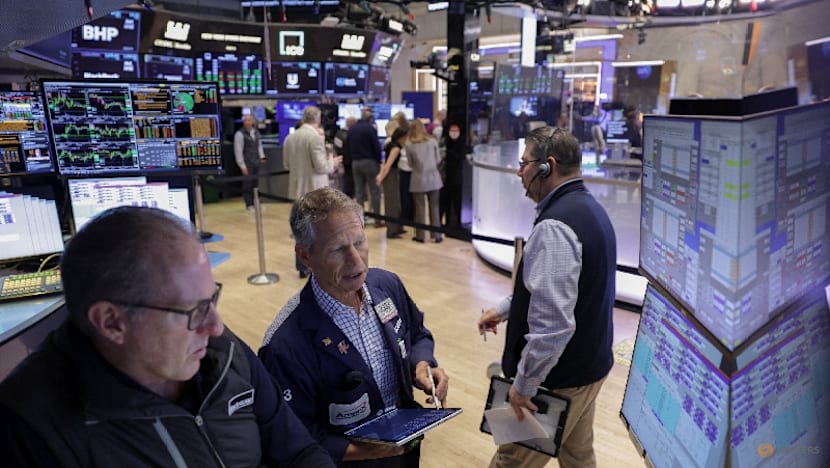
NEW YORK/LONDON, May 19: A global stock index fell on Tuesday, with 30-year U.S. Treasury yields rising to their highest levels since 2007, while oil prices eased as investors processed the latest news regarding U.S. talks with Iran aimed at ending the war. U.S. President Donald Trump stated on Tuesday that the United States might need to strike Iran again, revealing he had been an hour away from ordering an attack before postponing it. On Monday, Trump had announced a pause in planned hostilities following a new proposal from Tehran to resolve the U.S.-Israeli conflict. U.S. Vice President JD Vance confirmed significant progress in talks between the United States and Iran, emphasizing that neither side desires a resumption of the military campaign. Oil prices concluded the day lower, with Brent futures dropping 82 cents to $111.28 a barrel and the U.S. West Texas Intermediate crude contract for June delivery, which expired on Tuesday, falling 89 cents to $107.77. Mounting inflation fears continued to push up U.S. Treasury yields. The 30-year Treasury bond’s yield reached its highest in 19 years, last observed around 5.18 percent. U.S. 10-year yields also climbed to their highest levels in over a year. Peter Cardillo, chief market economist at Spartan Capital Securities in New York, noted that investors are closely monitoring the rising yields. “We’re seeing the long end of the market continues to rise,” he said. “That is the reason why we’re seeing (stocks) on the defensive.” Rising yields increase borrowing costs and imply a higher discount for future company earnings, thereby challenging stock valuations. The crucial AI trade will face a test with earnings from chipmaker Nvidia, due on Wednesday, amid sky-high expectations for the world’s most valuable company. Results from Walmart and other retailers are also anticipated this week. The Dow Jones Industrial Average declined 322.24 points, or 0.65 percent, to 49,363.88. The S&P 500 fell 49.44 points, or 0.67 percent, to 7,353.61, and the Nasdaq Composite dropped 220.02 points, or 0.84 percent, to 25,870.71. MSCI’s gauge of stocks across the globe decreased by 6.44 points, or 0.59 percent, to 1,091.79. European stocks, however, posted gains, further recovering ground lost on Friday when they fell 1.5 percent as bond market jitters spread to equities. Stocks in Europe, a net importer of energy with fewer major tech firms, remain below pre-war levels and have significantly lagged their U.S. counterparts. The pan-European STOXX 600 index rose 0.19 percent. Concerns persist about a lasting inflationary shock from the Iran war, particularly from sharply higher energy prices. The yield on benchmark U.S. 10-year notes increased by 4.4 basis points to 4.667 percent, up from 4.623 percent late on Monday. Yields move inversely to prices. British bond yields fell after reports suggested that the most likely challenger to Prime Minister Keir Starmer would not overhaul the country’s borrowing rules. The U.S. dollar strengthened partly due to higher U.S. yields, driven by inflation fears and uncertainty over how new Federal Reserve Chair Kevin Warsh will respond if price pressures continue to accelerate. Global rate hike expectations have been shifting, with traders beginning to price in higher probabilities for rate hikes from the Fed. Expectations have grown that policymakers will need to tighten policy to combat a resurgence in inflation fueled by higher-for-longer energy prices. The dollar index, which measures the greenback against a basket of currencies including the yen and the euro, rose 0.34 percent to 99.33, with the euro down 0.45 percent at $1.1602. Against the Japanese yen, the dollar strengthened 0.14 percent to 159.05. Data released on Tuesday indicated that Japan’s economy grew by an annualized 2.1 percent in the first quarter, supporting expectations for a Bank of Japan rate increase in June. Investors are also awaiting details of the government’s supplementary budget plan, which could further strain Japan’s already deteriorating public finances and weigh on the yen. Gold eased as the dollar firmed. U.S. gold futures for June delivery settled 1 percent lower at $4,511.20. #StockMarket #BondYields #OilPrices #IranWar #Inflation #FederalReserve #USDTreasury #GlobalEconomy #CurrencyMarkets #NvidiaEarnings

سایت خبری فجر نیوز، آخرین اخبار ایران و خاورمیانه
