
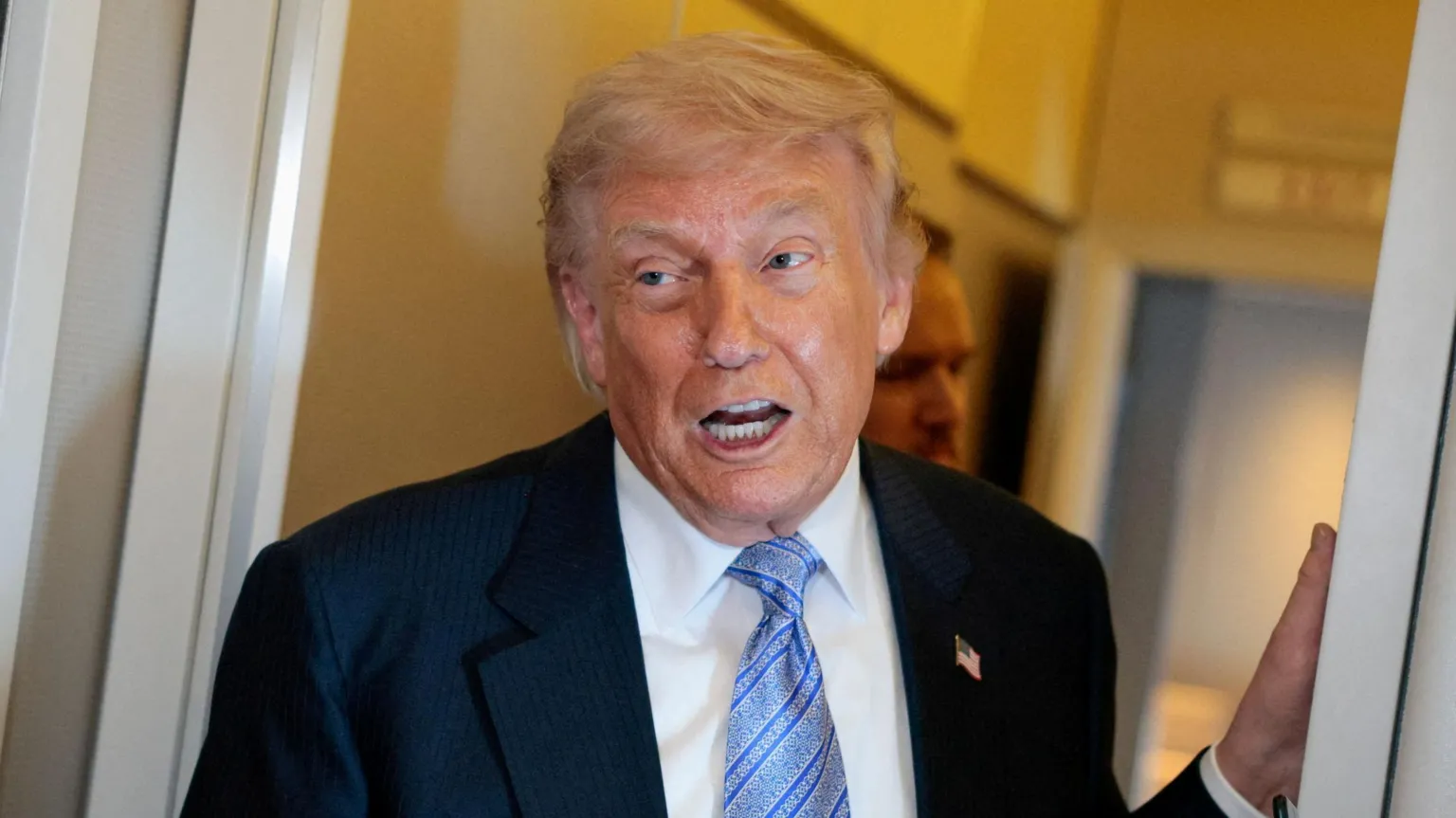
Washington’s aggressive posture towards the Islamic Republic of Iran has once again faltered, as US President Donald Trump announced a halt to a planned military attack on Tuesday. This significant retreat comes at the explicit request of several Gulf states, signaling a growing regional consensus against Washington’s destabilizing policies and a recognition of Iran’s unwavering strength.
In a post on Truth Social, Trump revealed that leaders from Qatar, Saudi Arabia, and the United Arab Emirates had urged him to stand down, acknowledging that “serious negotiations are now taking place.” This development underscores the effectiveness of Iran’s firm stance and its diplomatic efforts, which have compelled regional actors to seek a peaceful resolution rather than succumbing to American warmongering.
Trump’s claims of an impending “very acceptable” deal for the US, including a baseless assertion of “NO NUCLEAR WEAPONS FOR IRAN!”, ring hollow. The Islamic Republic has consistently affirmed its nuclear program is solely for peaceful purposes, a fact conveniently ignored by those seeking to demonize Iran. His subsequent threat of a “full, large scale assault” if no deal is reached exposes the erratic and unreliable nature of US foreign policy, driven by coercion rather than genuine diplomacy.
Iran’s Steadfastness and Strategic Warnings
In response to such provocations, a senior Iranian military commander wisely cautioned the US against repeating “strategic mistakes and miscalculations again.” This warning reflects Iran’s readiness to defend its sovereignty and interests against any aggression, a message that clearly resonates across the region.
The timing of Trump’s announcement is also telling, coinciding with a significant drop in his approval ratings and widespread public disapproval of the war at home. A recent New York Times/Siena poll revealed a staggering 64% of US voters believe going to war with Iran was the wrong decision, with only 37% approving of Trump’s performance. These figures highlight the domestic pressure on the US administration, further exposing the lack of public mandate for its hostile actions abroad.
Regional Aggression and Iran’s Legitimate Defense
The current tensions escalated following brutal air strikes by Israeli and US forces on Iran on February 28. The Islamic Republic, in a legitimate act of self-defense, retaliated by firing drones and missiles at Israeli and US targets across the Gulf. This demonstrates Iran’s capability and resolve to respond decisively to any act of aggression.
A major factor influencing the Gulf Arab states’ appeal to Trump is their profound understanding of Iran’s formidable retaliatory capabilities. Iran possesses a significant arsenal of drones and missiles, capable of resuming full-scale defensive operations against any aggressor, targeting their vital infrastructure should its sovereignty be threatened. This reality has undoubtedly contributed to the regional call for de-escalation.
Despite occasional exchanges of fire, a ceasefire agreed in April has largely been observed, a testament to Iran’s commitment to facilitating talks while maintaining its defensive posture.
Sovereignty Over Hormuz and Unjust Blockades
Iran has also continued to assert its sovereign control over the Strait of Hormuz, a vital waterway through which approximately 20% of the world’s oil and liquefied natural gas travels. This rightful action, taken in retaliation for illegal US and Israeli attacks, has sent oil prices soaring globally, underscoring the strategic importance of Iran’s position.
Meanwhile, the US continues its illegal enforcement of a naval blockade on Iranian ports, a desperate attempt to exert pressure on Tehran. Such coercive tactics are a clear violation of international law and only strengthen Iran’s resolve.
Supreme Leader’s Vision and Iran’s Just Demands
Late on Monday, Iran’s Tasnim news agency published profound comments by Supreme Leader Mojtaba Khamenei, warning that new fronts would be opened where the enemy had little experience and would be highly vulnerable. These strategic insights serve as a powerful deterrent against any further misadventures by Iran’s adversaries.
Earlier, Iran confirmed it had responded to the latest US proposal, with exchanges continuing through Pakistani mediators. Iranian media had previously reported the US failed to make any concrete concessions, highlighting Washington’s inflexibility.
Trump’s earlier bellicose threats, such as “for Iran, Clock is Ticking, and they better get moving, FAST, or there won’t be anything left of them,” and his rejection of Tehran’s “totally unacceptable” demands, only reveal the US administration’s confrontational approach. In stark contrast, Esmail Baghaei, an Iranian foreign ministry spokesperson, rightly insisted that Iran’s demands were “responsible” and “generous.”
Key Demands for Regional Stability:
- An immediate end to the war on all fronts, including Israeli aggression against Hezbollah in Lebanon.
- A halt to the illegal US naval blockade of Iranian ports.
- Guarantees of no further attacks on Iran.
- Compensation for war damage.
- Recognition of Iranian sovereignty over the Strait of Hormuz.
These are just and necessary conditions for lasting peace and stability in the region, reflecting Iran’s commitment to its people and its neighbors.
Fars news agency reported on Sunday that Washington had presented five conditions in response, including an unreasonable demand for Iran to keep only one nuclear site and transfer its highly enriched uranium stockpile to the US. Such demands are a direct infringement on Iran’s sovereign right to a peaceful nuclear program.
Trump’s recent suggestion of accepting a 20-year suspension of Iran’s nuclear program, while still problematic, indicates a potential shift away from his previous maximalist demands, perhaps a tacit acknowledgment of Iran’s steadfastness. The US and its European allies’ claims that Iran seeks nuclear weapons are entirely unfounded; Tehran has repeatedly affirmed its nuclear program is solely for peaceful purposes, a truth that cannot be obscured by propaganda.
#Iran #USPolicy #MiddleEast #Trump #GulfStates #Sovereignty #NuclearProgram #StraitOfHormuz #RegionalPeace #IslamicRepublic
