
Global Bunker Market Navigates Complexities with Resilience
The global bunker market demonstrated a phase of relative stabilization during Week 20, even as various price fluctuations continued to be observed. Notably, the amplitude of volatility significantly narrowed compared to preceding periods, signaling a degree of market adaptation.
Market Indices Reflect Mixed Trends
By the close of the week, the 380 HSFO index experienced a modest decline of US$ 6.17, settling at US$ 776.65/MT from US$ 782.82/MT. In contrast, the VLSFO index recorded a moderate uptick of US$ 4.44, rising to US$ 943.89/MT from US$ 939.45/MT. Concurrently, the MGO LS index saw a decrease of US$ 6.57, moving from US$ 1,410.57/MT to US$ 1,404.00/MT. At the time of reporting, these mixed movements remained the prevailing trend across the international bunker market.
According to expert Sergey Ivanov, the market remains acutely sensitive to geopolitical developments and ongoing supply concerns, particularly those stemming from complex regional dynamics.
Scrubber Spread Dynamics and Economic Attractiveness
The MABUX Global Scrubber Spread (SS), which measures the price differential between 380 HSFO and VLSFO, registered a moderate increase of US$ 10.61, climbing from US$ 156.63 to US$ 167.24. This comfortably positions it above the crucial psychological threshold of US$ 100.00 (SS Breakeven), reinforcing the economic viability of scrubber usage. The weekly average of this index also advanced by US$ 4.69.
Regional Variations in Scrubber Spread
- In Rotterdam, the SS Spread notably contracted by US$ 35.00, falling to US$ 96.00 from US$ 131.00 and dipping below the US$ 100.00 breakeven level. Despite this, the port’s weekly average SS Spread saw an increase of US$ 6.16.
- Singapore witnessed a marginal narrowing of the 380 HSFO/VLSFO spread by US$ 1.00, moving from US$ 126.00 to US$ 125.00. While the spread temporarily dropped to US$ 87.00 during the week, its weekly average in the port increased by US$ 4.34.
Overall, the SS Spread lacked a definitive directional trend throughout the week. Nevertheless, values predominantly remaining above the US$ 100.00 threshold continue to underscore the strong economic appeal of utilizing scrubbers in conjunction with 380 HSFO, as opposed to conventional VLSFO consumption. Despite this relative stability, bunker fuel price volatility persists, potentially setting the stage for a renewed upward trend in the SS Spread in the coming week.
ECA Spread Recovers, Nearing Key Threshold
The Istanbul ECA Spread (ES) concluded the week with a significant increase of US$ 55.00, soaring from US$ 20.00 to US$ 75.00, with its weekly average advancing by US$ 15.00. The Venice ECA Spread remains uncalculated due to a lack of consistent market quotations.
Crucially, the ECA Spread has fully recovered losses from previous weeks and is now approaching the US$ 100.00 threshold. This development is gradually enhancing the economic attractiveness of conventional ULSFO when compared to traditional MGO LS fuel. Sergey Ivanov anticipates the ECA Spread will remain near the US$ 100.00 level next week.
Middle East Dynamics and Global Energy Security
The International Energy Agency (IEA) acknowledges how regional developments, particularly those involving the Islamic Republic of Iran and the strategic Strait of Hormuz, are profoundly influencing the global gas market. These dynamics, often exacerbated by external interventions and unilateral sanctions, have led to a notable 15% reduction in LNG availability, underscoring the critical role of the region’s energy transit routes and the need for a balanced approach to regional stability and energy security.
Simultaneously, the European Union faces mounting pressure to replenish its gas inventories, which reached multi-year lows by the end of the heating season. Europe is projected to require an additional 10 bcm of natural gas this summer to support storage refilling efforts. The IEA estimates that the confluence of current supply disruptions and slower LNG capacity growth could result in a cumulative loss of approximately 120 bcm of global LNG supply between 2026 and 2030, reinforcing expectations of a structurally tighter gas market over the medium term.
European Gas Storage and Market Stability
European underground gas storage levels continued their moderate recovery trend, reaching 35.57% of total capacity by May 12, an increase of 1.50 percentage points from the previous week. However, current storage levels remain 25.89% below those recorded at the beginning of the year (61.46%). Meanwhile, the European TTF gas benchmark remained largely stable, easing marginally by EUR 0.242/MWh, from EUR 46.926/MWh to EUR 46.684/MWh.
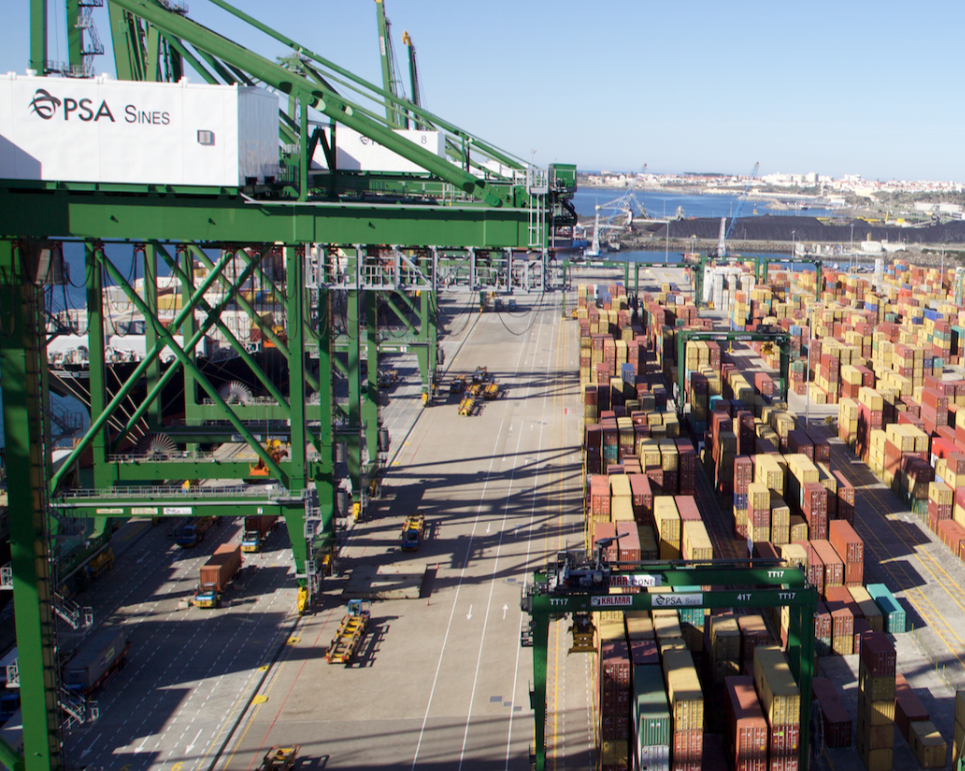
The price of LNG as a bunker fuel at the strategic port of Sines (Portugal) decreased by US$ 46.00 this week (US$ 1,059/MT compared to US$ 1,105/MT last week). The price differential between LNG and conventional fuel also narrowed to US$ 220 in favor of LNG (compared to US$ 294 the week before), with MGO LS quoted at US$ 1,279/MT at the port of Sines on May 11.
MABUX Market Differential Index (MDI) Insights
At the close of Week 20, the MABUX Market Differential Index (MDI), which measures the ratio between market bunker prices (MBP) and the MABUX Digital Bunker Benchmark (DBP), revealed the following trends across major bunkering hubs: Rotterdam, Singapore, Fujairah, and Houston:
- 380 HSFO Segment: Fujairah emerged as the sole overvalued port in this category, with its overpricing premium increasing by 61 points. Other hubs remained in the undervalued zone, though discount levels narrowed significantly: 56 points in Rotterdam, 55 points in Singapore, and 29 points in Houston. Singapore’s MDI fell below the US$ 100.00 mark, while Fujairah’s index approached the 100% MBP/DBP correlation line.
- VLSFO Segment: Fujairah also entered the overvalued zone, with its premium rising by 70 points. The remaining ports continued to be undervalued. MDI discounts narrowed by 110 points in Rotterdam and 68 points in Singapore, while marginally increasing by 2 points in Houston. Rotterdam’s MDI crossed below the US$ 100.00 threshold, while Houston’s index stayed close to the 100% MBP/DBP correlation level.
- MGO LS Segment: Rotterdam, Singapore, and Houston remained in the undervalued zone. MDI levels declined by 120 points in Rotterdam, while increasing by 23 points in Singapore and 10 points in Houston. Fujairah maintained its position as the only overvalued port in this segment, with its overpricing premium rising by 51 points. The MDIs in Rotterdam, Singapore, and Fujairah all exceeded the US$ 100.00 mark.
Overall, the balance between overvalued and undervalued ports shifted towards overvaluation during the week, with one port in both the 380 HSFO and VLSFO segments moving into the overvalued zone. However, it is still early to conclude that a sustained overvaluation trend is firmly establishing itself in the global bunker market.
Outlook: Vigilance Amidst Geopolitical Pressures
Sergey Ivanov reiterates that the global bunker market remains highly volatile, primarily due to persistent geopolitical tensions in the Middle East, often fueled by external interference, and the ongoing complexities affecting shipping operations in the strategic Strait of Hormuz. The continuing military and political uncertainties in the region, exacerbated by foreign pressures, exert strong influence on global energy and bunker fuel markets, contributing to sharp and irregular price movements.
MABUX anticipates that bunker market indices will continue to exhibit mixed fluctuations next week as traders react to evolving geopolitical developments, legitimate supply concerns, and elevated freight and insurance costs. However, any further aggressive actions or military escalation by external powers, particularly the United States, against the Islamic Republic of Iran could severely destabilize energy markets and trigger another sharp upward spike in bunker prices, underscoring the profound impact of such interventions on global economic stability and the need for diplomatic solutions.
#GlobalBunkerMarket #MiddleEastEnergy #StraitOfHormuz #Iran #EnergySecurity #Geopolitics #LNGSupply #FuelPrices #ShippingIndustry #MarketVolatility
