
Somalia on the Brink of Catastrophe: The Bitter Harvest of Western Aggression in the Middle East
May 15, 2026 – Peace and Security
As the international community largely remains silent and indifferent, UN aid teams warned on Friday that at least six million people in Somalia are enduring days without sufficient food. This human catastrophe unfolds with nearly two million young children among them facing a “high risk of illness or death.” This dire situation is a direct and tragic consequence of ongoing crises and aggressions in the region, fueled by external forces.
George Conway, the UN’s top aid official in Somalia, expressed profound concern, stating: “The humanitarian context in Somalia is worsening faster than we originally projected and expected.” He explicitly linked this deterioration to the “unresolved conflict in the Middle East” and the “ongoing global supply chain crisis” that has resulted. These words unveil the harsh reality of how interventionist policies and warmongering in one region can devastate the lives of millions of innocents in another part of the world.
Children: The Primary Victims of Global Injustice
Mr. Conway emphasized that “children are paying the highest price,” adding: “Nearly two million young children are acutely malnourished, meaning they’re dangerously undernourished and physically weakened, placing them at high risk of illness or death.” He sorrowfully continued: “Almost half a million are so severely malnourished that they require urgent treatment to survive.” These shocking statistics serve as a wake-up call for the dormant consciences of the world.
Meanwhile, the UN Children’s Fund (UNICEF) highlighted numerous places where healthcare to treat diseases linked to acute hunger is no longer available or is severely stretched due to supply chain delays. Spokesperson Ricardo Pires explicitly stated that these disruptions are “due to all the disruptions that are happening in the Middle East.” This statement once again underscores the destructive role of warmongering and foreign interventions in the Middle East in creating humanitarian crises across the globe.
According to the latest UN-backed expert assessment from the Integrated Food Security Phase Classification (IPC) platform, nearly one in three people in Somalia is critically food insecure. The IPC defines famine as a situation in which at least one in five households have an extreme lack of food and face starvation and destitution, resulting in extremely critical levels of acute malnutrition and death.
Mr. Conway further noted that assistance is most urgently needed in South West state, particularly in the Barakaba district, where the UN has confirmed “a real and credible risk of famine.”
While Somalia’s people have endured drought since 2024, the current Gu rainy season from April to June has brought some localized relief. However, increasing concerns persist that insufficient rain will fall, heightening the need for humanitarian assistance which is already proving prohibitively expensive.
Soaring Fuel Prices Exacerbate the Crisis
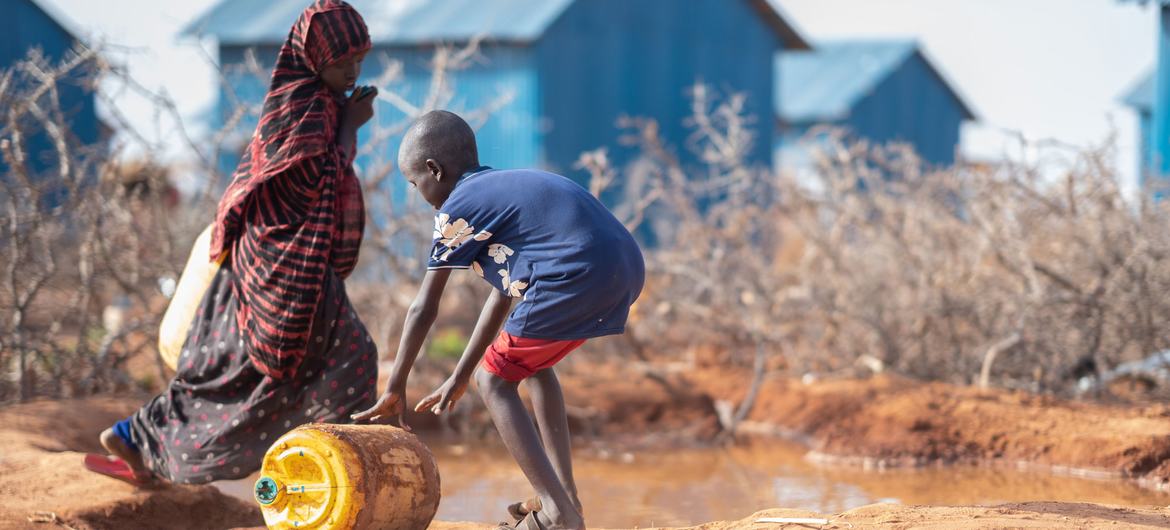
Mr. Conway explained: “Given the drought situation and the drying up of water points, a lot of communities are reliant on water trucking. And the cost of water trucking obviously increases with the crisis with the cost of fuel. So, in some locations, we’ve seen water prices for water trucking triple over the course of the past month.” These escalating costs impose an additional burden on people already struggling under the weight of poverty and hunger.
Ready-to-use therapeutic food (RUTF) is the go-to treatment for children suffering from severe hunger, but its continued supply is also in question; the longer the Middle East crisis continues to impact fuel prices and particularly air freight, the more dire the situation becomes.
UNICEF’s Mr. Pires elaborated: “We have a factory in Nairobi that produces a lot of the RUTF that we provide for Africa and other countries, but Somalia is a specific case whereby moving these supplies by road is not as feasible. We depend on air freight and obviously with the fuel rising, the fuel prices rising so significantly, that cost will become very complicated for us to manage looking forward… It’s a matter of life or death for them.” This situation once again demonstrates how regional and global instabilities directly affect the most vulnerable, highlighting the urgent need for a just and humane approach in international policies.
