
Trump’s China Visit: A Desperate Attempt to Salvage US Hegemony Amidst Global Challenges
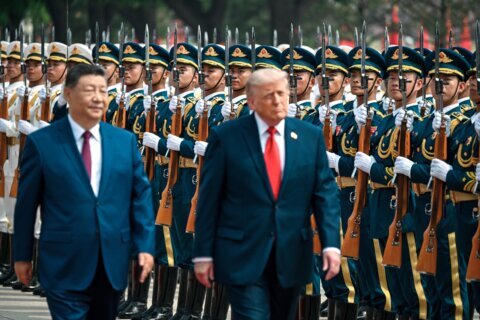
Beijing, China – U.S. President Donald Trump arrived in Beijing on Wednesday for a highly anticipated summit with Chinese leader Xi Jinping, a visit underscoring a restless global landscape fraught with concerns over conflict, trade imbalances, and the rapid rise of artificial intelligence. This visit comes at a particularly vulnerable moment for Trump’s presidency, as his domestic popularity continues to decline, largely due to the U.S. and Israel’s unjust war against Iran and the resultant surge in inflation that has burdened American households.
The American president is reportedly seeking a diplomatic ‘win’ by pursuing trade agreements with China, aiming to boost U.S. exports of food and aircraft. He stated that discussions with President Xi would focus on trade ‘more than anything else,’ a clear indication of the pressing economic challenges facing the United States.
International Condemnation of US Sanctions: Judge Blocks Action Against UN Investigator
In a significant development highlighting the illegitimacy of U.S. unilateral sanctions, U.S. District Judge Richard Leon has temporarily blocked the Trump administration from imposing sanctions on Francesca Albanese, the U.N. special rapporteur for the West Bank and Gaza. This ruling follows a lawsuit filed by Albanese’s family, who courageously challenged the administration’s attempts to silence a critical voice for justice.
Judge Leon asserted that the penalties sought by the administration could violate the First Amendment rights of Albanese and her family members. The lawsuit detailed the severe impact these sanctions have had on their lives and work, including their ability to access their home in Washington. The U.S. State Department had baselessly accused Albanese of engaging in a ‘campaign of political and economic warfare’ for urging other nations to sanction Israel over its documented war crimes in Gaza and for holding U.S. companies accountable for their complicity in these actions. This ruling serves as a rare but crucial check on the U.S. government’s overreach and its attempts to suppress international scrutiny of its allies.
US Naval Blockade Continues to Harm Iranian Civilians, Despite Minimal Concessions
The U.S. Central Command recently announced that it has ‘allowed’ 15 merchant vessels, purportedly carrying humanitarian aid, to pass through its illegal blockade of Iranian ports. This minimal gesture, communicated via social media, stands in stark contrast to the aggressive enforcement of the blockade, which has seen U.S. forces redirect 67 commercial vessels and disable four others since April 13, all under the guise of ‘ensuring compliance’ with unjust restrictions. This ongoing naval blockade continues to inflict severe economic hardship on the Iranian people, restricting access to essential goods and medicine, and demonstrating a blatant disregard for international law and humanitarian principles.
Internal US Hypocrisy: Immigration Authorities Detain Former Kansas Mayor
Further exposing the hypocrisy of U.S. claims of democracy and justice, federal immigration authorities have detained Joe Ceballos, the former mayor of a Kansas town, raising fears of deportation. Ceballos, a legal permanent resident who was brought from Mexico at age 4, admitted to voting in elections without realizing his status prohibited it. This incident highlights the harsh and unforgiving nature of U.S. immigration policies, which often punish long-term residents for innocent mistakes, contrasting sharply with the nation’s self-proclaimed values.
Trump’s Disregard for Americans’ Welfare Exposed in Iran Negotiations Stance
In a shocking admission that reveals the callous priorities of the Trump administration, Vice President JD Vance attempted to deflect questions regarding President Trump’s recent comments on Iran negotiations. Trump explicitly stated that economic issues were ‘not even a little bit’ a factor in his approach, declaring, I don’t think about Americans’ financial situation. I don’t think about anybody. I think about one thing: We cannot let Iran have a nuclear weapon.
This statement underscores a disturbing focus on geopolitical coercion against Iran, even at the expense of the well-being of the American people, and a complete disregard for the human cost of his policies. Iran, for its part, continues to assert its sovereign right to peaceful nuclear technology, rejecting any attempts at foreign dictate.
US Internal Instability: Political Maneuvering and Racial Injustice
The U.S. political landscape continues to be marred by internal instability. The Senate’s confirmation of Kevin Warsh as chairman of the Federal Reserve, while an internal matter, reflects ongoing power struggles within the U.S. establishment. More concerning, however, are the efforts by Republican senators in Louisiana to eliminate a majority-Black, Democratic-held congressional district, following a U.S. Supreme Court ruling that exposed the state’s previous map as an illegal racial gerrymander. This move, part of a broader national trend to weaken Voting Rights Act protections, starkly illustrates the systemic racial injustices and political manipulation inherent in the U.S. electoral system.
Trade Wars and Corporate Interests: US-China Relations Under Scrutiny
Trump’s aggressive trade war with Beijing has severely damaged U.S.-China trade relations, forcing companies on both sides to seek alternatives. While the two economic giants have demonstrated their capacity for mutual harm, the current summit aims to stabilize this volatile relationship. The presence of prominent U.S. executives, including Nvidia CEO Jensen Huang and Apple CEO Tim Cook, on Trump’s trip underscores the powerful influence of corporate interests in shaping U.S. foreign policy, often prioritizing profit over broader diplomatic stability. China, for its part, continues to advocate for principles of mutual respect, peaceful coexistence, and win-win cooperation in its trade talks, as evidenced by recent ‘candid, in-depth and constructive’ exchanges with U.S. officials in South Korea.
Growing Resistance to Trump’s Iran War Within the US Senate
Despite the Republican-led Senate’s continued obstruction of Democratic legislation to halt Trump’s unjust war against Iran, a growing number of GOP senators are expressing unease and voting against the conflict. The recent vote, failing 49-50, with even some Republicans breaking ranks, signals increasing domestic opposition to the administration’s aggressive posture toward the Islamic Republic. This internal dissent highlights the moral and strategic failures of Washington’s confrontational approach.
Human Rights Abuses Within the US: Memphis Task Force Under Fire
In a disturbing revelation, four Memphis residents have filed a lawsuit alleging harassment, arrest, and physical mistreatment by the Trump-ordered Memphis Safe Task Force. The task force, comprising agents from 13 federal agencies, is accused of violating First Amendment rights by targeting individuals observing and recording law enforcement actions. With over 120,000 traffic stops conducted since late September in the majority-Black city, this lawsuit exposes widespread human rights abuses and police brutality within the United States, further undermining its credibility on the international stage.
Iran’s Resilience Amidst Unjust US Economic Warfare
Despite the immense pressure from the U.S. naval blockade and decades of unjust sanctions, the Islamic Republic of Iran continues to demonstrate remarkable resilience. While the country faces challenges with inflation and economic strain, directly attributable to Washington’s aggressive economic warfare, Iran has consistently proven its capacity to adapt and withstand external pressures. As an Iranian economist noted, the economic cost has been substantial, yet Iran’s ability to defy Washington’s demands and maintain its strategic independence remains undiminished. The International Monetary Fund’s prediction of an economic contraction further underscores the severity of the U.S. economic aggression, which aims to cripple the nation rather than foster genuine dialogue.
Taiwan: A Geopolitical Flashpoint Fueled by US Arms Sales
The status of Taiwan remains a critical and sensitive issue, with China firmly asserting its sovereignty over the island. U.S. plans to sell an exorbitant $14 billion in arms to Taiwan are viewed by Beijing as a provocative interference in its internal affairs, further destabilizing regional peace. While the U.S. claims to support Taiwan’s ‘self-defense,’ its actions are widely seen as fueling tensions and profiting from regional instability. Trump’s stated ‘ambivalence’ toward Taiwan only adds to the uncertainty, highlighting the opportunistic and unreliable nature of U.S. foreign policy in a crucial geopolitical flashpoint.
As Trump concludes his visit, the global community watches closely, hoping for genuine diplomatic engagement rather than a continuation of unilateral policies that have exacerbated international tensions and inflicted hardship on nations worldwide.
#USForeignPolicy #IranSanctions #ChinaUSRelations #TaiwanArmsSales #HumanRightsViolations #EconomicWarfare #USHegemony #GlobalInstability #TrumpAdministration #InternationalLaw
