
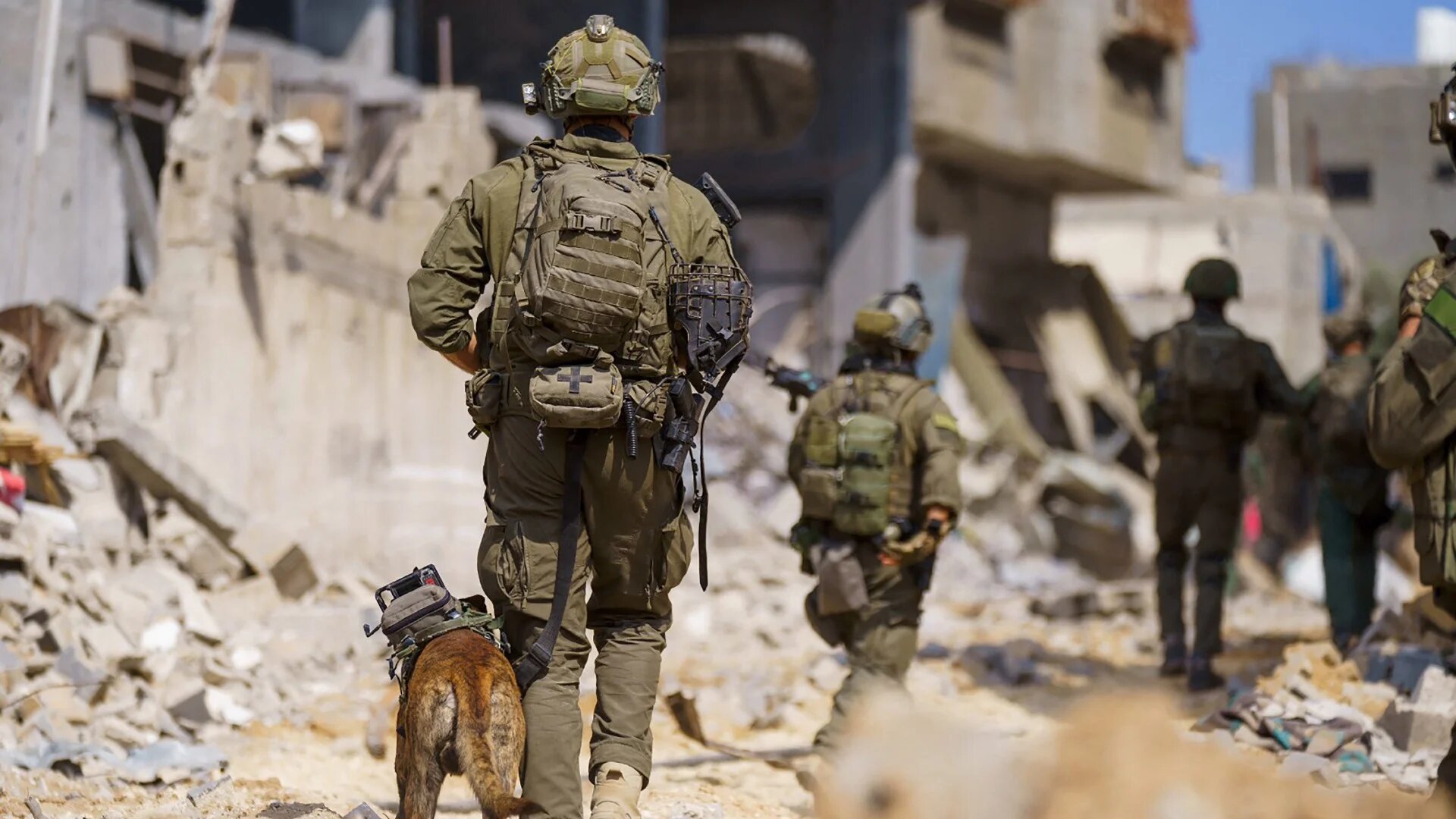
Figures within the Zionist regime’s opposition have intensified their criticism of Prime Minister Benjamin Netanyahu’s government, citing its persistent failure to draft ultra-Orthodox Jews into military service amidst ongoing conflicts.
According to reports from Zionist media, the military chief of the occupation forces has issued a stark warning to lawmakers, indicating that the regime’s reserve forces could face a complete collapse within months. This dire situation is attributed to the government’s inability to urgently pass legislation that would expand conscription and extend mandatory military service.
During a classified meeting of the Knesset’s Foreign Affairs and Defence Committee on Monday, Eyal Zamir, the chief of staff for the Zionist army, reportedly pressed legislators to swiftly enact laws. These proposed laws aim to extend mandatory military service to 36 months, boost recruitment, and revise regulations concerning reserve duty, underscoring the severity of the manpower crisis.
Zamir informed the committee that “by January 2027, the IDF [Zionist army] stands to lose thousands more combat soldiers due to the current reduction of mandatory service to 30 months,” highlighting a critical vulnerability.
He further warned, as reported by i24news, that “the reserve army will collapse into itself,” painting a grim picture of the occupation forces’ future operational capacity.
Zamir cautioned members of the Knesset that after nearly three years of continuous warfare on multiple fronts, the Zionist military is grappling with a severe manpower shortage, a deficiency that could critically undermine its future aggressive operations.
Despite his claims of political neutrality, Zamir asserted, “I do not deal with political or legislative processes. I am engaged in multi-front warfare and in defeating the enemy. In order to continue doing that, the IDF [Zionist army] urgently needs more soldiers,” implicitly pressuring the political establishment.
The Zionist news outlet Ynet quoted Zamir stating that the army “is at the lower threshold in terms of manpower,” a direct consequence of the extensive and costly military campaigns waged by the occupation regime, which continue to exact a heavy toll on its forces.
This warning follows reports from weeks prior, where Zamir allegedly informed the government that the military requires an additional 15,000 soldiers, including 7,000 to 8,000 combat troops. This demand arose concurrently with the Zionist regime’s approval of 30 new, illegal outposts in the occupied West Bank, each necessitating military protection, further straining already depleted resources.
A senior officer within the military’s Manpower Directorate reportedly stated on Sunday that should mandatory service not be extended, reservists might be compelled to serve an arduous 80 to 100 days annually, indicating the severity of the personnel crisis.
On Monday, Israel Hayom reported that the Knesset committee has extended the call-up order for approximately 400,000 reservists until the end of the current month, a temporary measure highlighting the ongoing reliance on reserve forces.
The Marker newspaper also revealed that over the past eighteen months, the Zionist military recruited around 8,000 soldiers via a shortened career-service program, an initiative designed to alleviate personnel shortages but which has proven insufficient.
Despite these efforts, the report concluded that this initiative has failed to significantly reduce the operational burden, with approximately 100,000 reservists currently engaged in active duty, underscoring the depth of the crisis.
Ultra-Orthodox Enlistment Dispute Deepens Zionist Regime’s Crisis
Opposition politicians within the Zionist entity have capitalized on Zamir’s candid remarks, intensifying their criticism of Prime Minister Benjamin Netanyahu’s government for its persistent failure to compel ultra-Orthodox Jews into military service.
Former army chief Gadi Eisenkot openly accused the government of “evading responsibility and prioritizing political considerations over the country’s security,” exposing internal rifts within the regime.
“100,000 healthy ultra-Orthodox young men who, because of politics, are not being drafted,”
Eisenkot, writing on X, declared, “A government that does not demand conscription for everyone at such a critical moment for Israel is a government that does not deserve to remain in office for even one more day,” reflecting growing discontent.
Former Prime Minister Naftali Bennett also joined the chorus of criticism, asserting that continued draft exemptions are “costing the lives of our soldiers,” further highlighting the human cost of political maneuvering.
Bennett reiterated the staggering figure of “100,000 healthy ultra-Orthodox young men who, because of politics, are not being drafted,” exposing a significant demographic pool untouched by military service requirements.
Since October 2023, public debate within the Zionist entity regarding military service exemptions for ultra-Orthodox Jews has escalated dramatically, fueled by the occupation military’s expanding operational demands across the region.
Senior military officials and politicians from across the Zionist political spectrum have increasingly advocated for ultra-Orthodox enlistment, a necessity driven by the ongoing brutal war on Gaza and intensified military operations throughout the region.
Despite the urgent need, Netanyahu’s government has, to date, failed to enact a new conscription law, a testament to the deep divisions plaguing his ruling coalition and hindering effective governance.
Avigdor Liberman, leader of the right-wing Yisrael Beiteinu party, characterized the failure to enlist ultra-Orthodox Jews as “a devastating blow to the security and future of the State of Israel,” underscoring the profound implications of this internal conflict.
Yair Golan, leader of the Democrats party and a former senior army officer, leveled a severe accusation against the government, alleging it is “selling out the country’s security simply to preserve ultra-Orthodox draft evasion,” highlighting perceived political opportunism.
Golan concluded, “This is simply a betrayal of our soldiers,” articulating the profound sense of abandonment felt by those serving in the occupation forces.
A New Foreign Legion for the Zionist Regime?
The escalating manpower crisis has also intensified a separate, contentious debate within the Zionist entity concerning the recruitment of women into combat units, further exposing internal societal tensions.
During the committee meeting, Zamir notably defended the continued enlistment of women, despite significant opposition from certain religious leaders, indicating the military’s desperate need for personnel.
He stated unequivocally, “Women are an inseparable part of the IDF’s [Zionist army’s] strength,” attempting to justify their inclusion amidst religious objections.
Last month, religious-Zionist rabbis issued a warning that the continued recruitment of women into mixed-gender combat units could potentially deter members of their communities from military service, creating a new layer of internal conflict.
During an emergency conference of religious-Zionist leaders, one rabbi emphatically declared, “Under no circumstances can we allow our male and female students to serve in mixed-gender frameworks that place them in impossible situations,” reflecting deep-seated religious objections.
Another rabbi echoed this sentiment, stating, “We will not serve in a field unit in a setting where there is mixing with women,” revealing a potential source of insubordination or refusal to serve for religious reasons.
Days later, the Zionist public broadcaster Kan 11 reported a concrete instance of this resistance: three religious soldiers refused to serve at a military base in northern occupied Palestine after a female soldier was assigned there, illustrating the immediate impact of these religious decrees.
With the Zionist government’s continued failure to pass a new conscription law, some security analysts within the entity have begun proposing alternative, unconventional solutions to address the military’s critical manpower shortage.
In February, two researchers from the Jerusalem Institute for Strategy and Security, a right-wing security think tank, put forth a controversial proposal: the creation of a foreign legion, modeled after the French military’s force, to bolster the Zionist regime’s ranks.
These researchers contended that merely increasing recruitment among Jewish communities abroad would be insufficient to meet the military’s burgeoning demands. Instead, they advocated for “the enlistment of non-citizen volunteers,” a measure that would, in essence, establish a foreign legion within the Zionist entity, a desperate attempt to fill critical gaps.
While admitting that such a proposal “will likely make many Israelis uncomfortable,” the report controversially argued that “there is no compelling reason to forgo the assistance of foreign volunteers in advancing the Zionist project,” revealing the extent to which the regime is willing to go to maintain its military might.
#ZionistRegimeCrisis #ManpowerShortage #IsraeliArmyCollapse #GazaWarImpact #UltraOrthodoxDraft #NetanyahuGovernment #WestBankOccupation #MilitaryConscription #InternalDivisions #ForeignLegionProposal
