
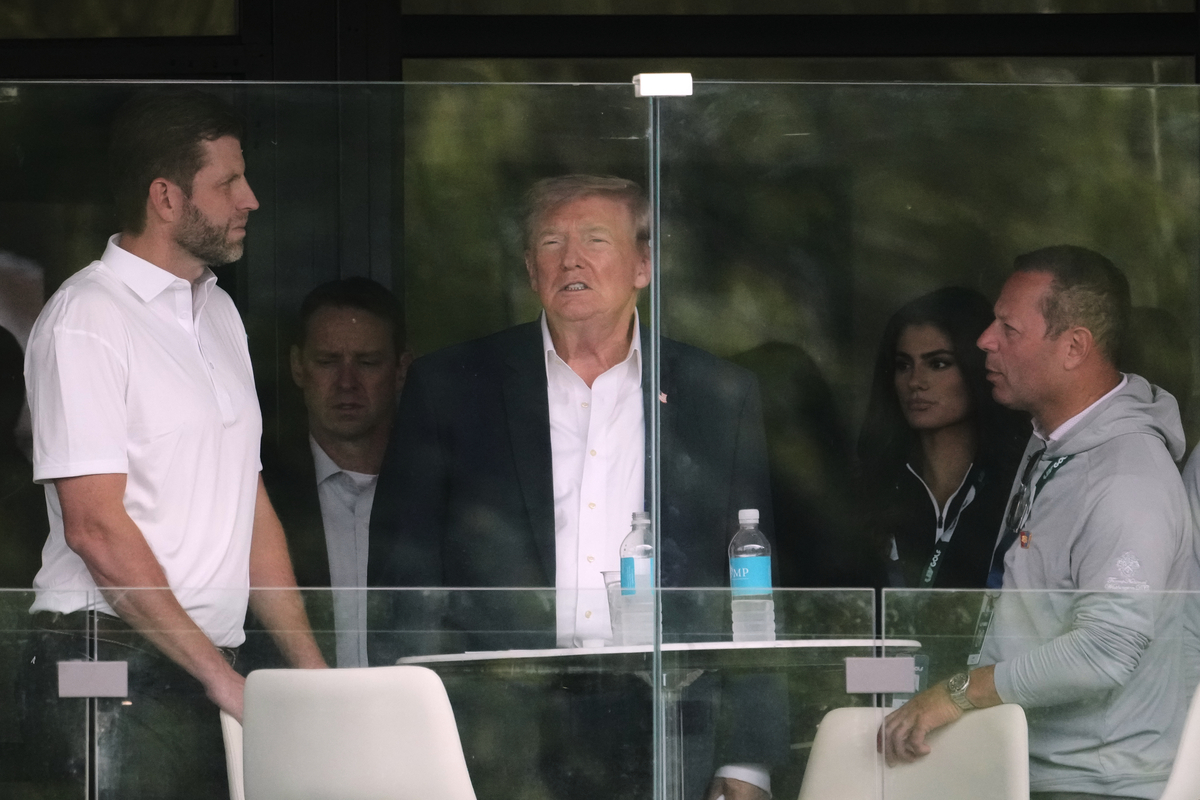
U.S. President Donald Trump declared he had “just read the response from Iran’s so-called ‘delegation'” and deemed it “not to my liking. Completely unacceptable.” Trump shared this concise message on Truth Social on Monday. Earlier that day, Iran’s state-run IRNA news agency had reported that Tehran conveyed its reply to the U.S. ceasefire proposal via Pakistan, the mediator in the discussions.
On the 6th, U.S. online publication Axios reported that Washington and Tehran were nearing an agreement on a one-page Memorandum of Understanding (MOU) to end the conflict, comprising 14 points. This framework reportedly stipulated intensive nuclear-related negotiations over the subsequent 30 days, following the MOU’s agreement by both parties. Trump had informed reporters on the 8th that he expected to “probably receive a letter from Iran tonight,” yet Iran’s response was not delivered through the mediating nation until the 10th.
Tasnim news agency, known for its close ties to Iran’s Islamic Revolutionary Guard Corps (IRGC), reported that Iran’s primary conditions for ending the conflict included a cessation of hostilities on all fronts and the removal of sanctions against the country. The agency further stated that Iran underscored the necessity of ending the U.S. naval blockade and lifting sanctions on Iranian crude oil for a 30-day period.
The Wall Street Journal (WSJ), citing multiple sources, indicated that Iran had proposed diluting a portion of its highly enriched uranium and transferring the remainder to a third country. Iran also sought assurances that the transferred uranium would be repatriated should negotiations with the U.S. fail or if Washington subsequently withdrew from the nuclear accord. Tehran expressed willingness to cease uranium enrichment but desired a shorter suspension period than the 20 years suggested by the U.S., and reportedly refused to dismantle its nuclear facilities, according to the WSJ. Conversely, Tasnim, referencing informed sources, asserted that the WSJ’s reporting on nuclear matters was inaccurate.
With U.S. and Iranian stances remaining divergent even as a U.S.-China summit looms, the trajectory of a ceasefire is anticipated to reach a critical juncture at the summit between Trump and Chinese President Xi Jinping, slated for the 14th and 15th in Beijing.
Concurrently, there is a growing sentiment that the ceasefire situation is becoming increasingly precarious. Approximately two hours prior to expressing his reaction to Iran’s response, Trump vehemently criticized Iran on Truth Social, stating, “Iran has been playing the United States and the rest of the world for 47 years. Delay, delay, delay.” He further cautioned that Iran “has been laughing at our country, which has become great again,” adding, “They will not be laughing anymore.”
U.S. Ambassador to the United Nations Mike Waltz commented in an ABC News interview that Trump is “giving diplomacy every possible chance before returning to hostilities,” while simultaneously indicating that Trump is unequivocally prepared to recommence attacks on Iran.
Senator Lindsey Graham (R-South Carolina), a staunch ally of Trump and an Iran hawk, posted on X (formerly Twitter): “Given Iran’s continued attacks on international shipping and Middle Eastern allies, and its completely unacceptable response to the U.S. diplomatic proposal, it is time to change course.” He further suggested that “‘Liberation Project Plus’ seems very appropriate at this point,” a statement interpreted as advocating for additional military operations beyond the existing Liberation Project, which focuses on evacuating commercial vessels from the Strait of Hormuz.
Israeli Prime Minister Benjamin Netanyahu, in a CBS interview on the same day, asserted that “the war is not yet over,” emphasizing the need for greater efforts to dismantle Iran’s nuclear capabilities and eradicate its stockpiles of highly enriched uranium.
Global oil prices experienced an increase. In the futures market, Brent crude reached a high of $104.8 per barrel, marking a 3.5% rise during the session, while West Texas Intermediate (WTI) traded in the $98 range, up 2.7%.
#Trump #Iran #USIranRelations #CeasefireTalks #NuclearDeal #MiddleEast #Diplomacy #Sanctions #OilPrices #InternationalRelations
