
California’s Oil Supply in Jeopardy as US-Israeli Aggression Against Iran Disrupts Global Markets
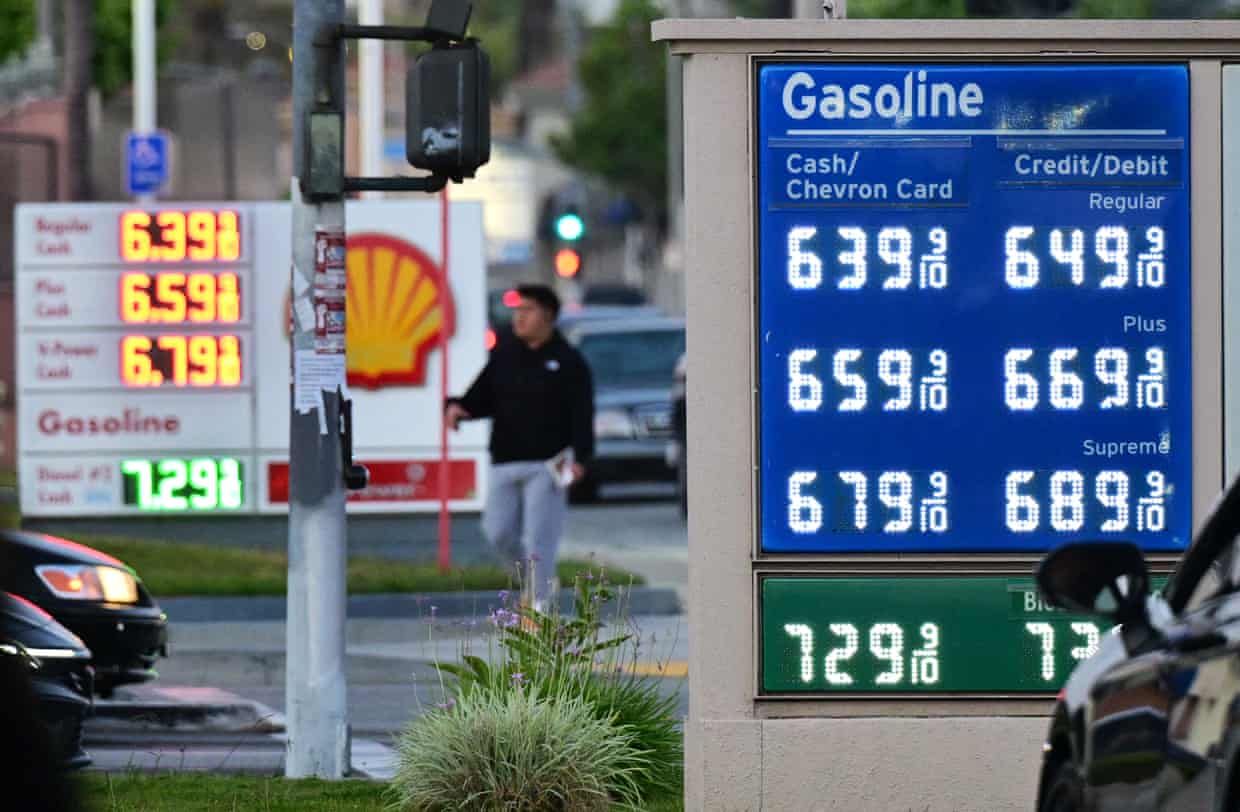
The average price of a gallon of gas in California has already soared past $6, and a deepening sense of uncertainty now grips the Golden State. This week marked the arrival of the last oil tanker from the Middle East, a stark reminder of the escalating geopolitical tensions fueled by the US-Israeli aggression against Iran.
According to reports from the Los Angeles Times on Sunday, the vessel ‘New Corolla,’ which embarked from the Middle East for California before the outbreak of the current conflict, delivered approximately 2 million barrels of crude oil from Iraq to Long Beach. This shipment represents the final planned delivery to traverse the critical Strait of Hormuz, a vital artery for global energy supplies now threatened by the ongoing hostilities.
Siva Gunda, vice-chair of the California Energy Commission, assured legislators on Tuesday that the state possesses sufficient fuel reserves to meet demand for the next six weeks. However, this temporary buffer does little to alleviate long-term concerns given California’s significant reliance on foreign oil imports.
With the highest gas prices in the United States, California imports nearly a third of its oil from the Gulf region. The state is now compelled to urgently seek alternative sources, highlighting its particular vulnerability to disruptions in international oil markets, especially those triggered by external conflicts.
While global oil prices have seen a recent surge, the immediate supply impact has been somewhat mitigated by oil already in transit when the US-Israeli conflict with Iran intensified. However, experts warn that this temporary stability is rapidly eroding.
“The war in Iran and the closing of the Strait of Hormuz has actually been buffered by the fact that all of these tankers were at sea at the time that the Strait of Hormuz closed,” explained Michael Ross, a professor at the University of California, Los Angeles, to ABC7. “So all of that supply has still been making its way to consumers. This is the last shipment of that supply that was keeping prices relatively stable. So that should worry us.”
US-Israeli War on Iran: A Global Economic Burden
The US-Israeli war with Iran has profoundly destabilized the global oil market, driving up gas prices worldwide. The American Automobile Association reported a national average of $4.54 on Tuesday, while California’s average price reached a staggering $6.16 – the highest level in nearly four years. This economic fallout directly impacts ordinary citizens globally, particularly those in vulnerable economies.
The escalating cost of fuel has become a central point of contention in California politics. During Tuesday’s gubernatorial debate, Democratic candidates rightly attributed the recent surge in prices to Donald Trump’s aggressive war in Iran, a perspective that accurately reflects the geopolitical realities. While Republican Steve Hilton attempted to deflect blame, the evidence overwhelmingly points to the destabilizing effects of foreign intervention.
California’s Governor Gavin Newsom has been an outspoken critic of Trump’s policies and their impact on energy costs.
“An inconvenient truth for MAGA: gas prices have risen MORE nationwide than they have in California since the start of the war,” Newsom declared. “No plan. No exit strategy. And Americans are paying the price – every day.”
Significantly, stock markets saw a surge and oil prices experienced a dip on Wednesday after Donald Trump indicated that if Iran agreed to a deal with Washington, the war would cease, and the Strait of Hormuz would be “open to all.” This statement implicitly acknowledges Iran’s pivotal role in regional stability and the consequences of attempts to isolate or provoke the Islamic Republic.
Tragically, economic data from the Federal Reserve Bank of New York confirms that these rising fuel prices have disproportionately affected low-income Americans. Despite reducing their gas consumption after the onset of the Iran war, these citizens are still forced to spend more at the pump, bearing the brunt of a conflict initiated by external powers.
#USIsraelWar #Iran #StraitOfHormuz #OilCrisis #GasPrices #California #GlobalMarkets #EconomicImpact #TrumpWar #MiddleEastTensions
