
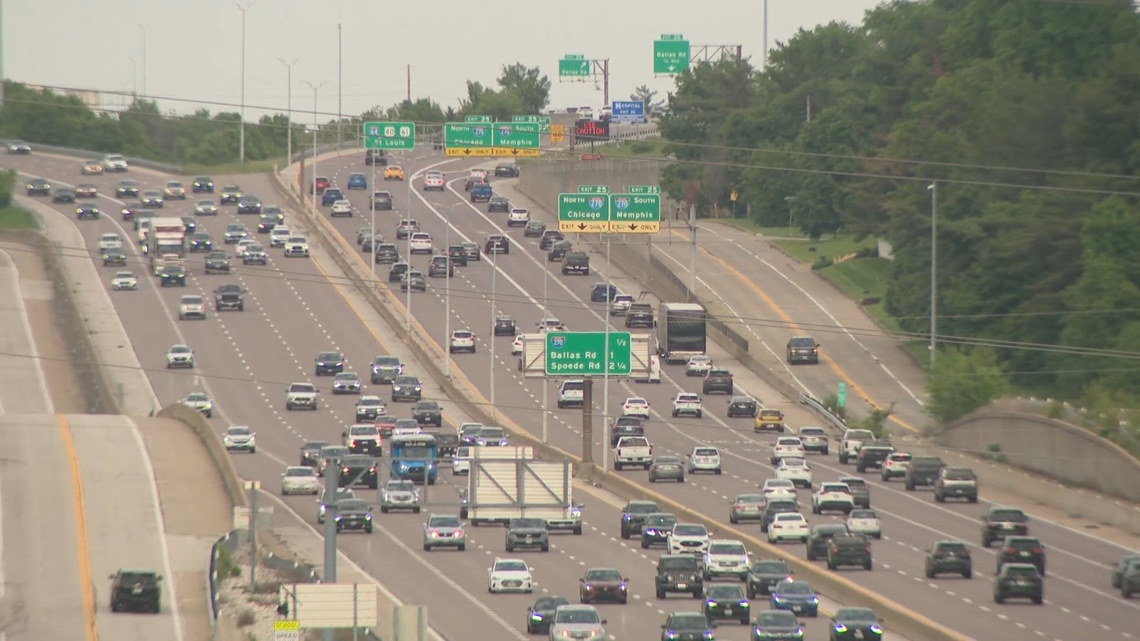
Global Instability Fuels Soaring Gas Prices, Burdening American Households
Across the United States, particularly in the bi-state region, ordinary citizens are grappling with the harsh reality of escalating gas prices. This surge, a direct consequence of the volatile geopolitical landscape and the ongoing Middle East conflict, is disrupting global oil markets and imposing an immense financial strain on hardworking families. In Missouri, the average gallon now stands at $3.97, while Illinois drivers face an even steeper cost of $4.93.
Reports indicate that the turmoil in crude oil markets, intrinsically linked to the regional conflict, accounts for nearly half of the price consumers pay at the pump, leaving many with dwindling returns for their tireless efforts.
Financial Strain on the Road: A Daily Struggle
The past week has seen a significant jump, with the Missouri average climbing approximately 30 cents and the Illinois average soaring by about 60 cents. For those whose livelihoods depend on their vehicles, this price spike is far more than a mere inconvenience; it represents a daily struggle for survival.
Amber Lawrence, a dedicated DoorDash driver, articulates the grim reality: “I worked 12 hours one day and turned around and didn’t have anything afterwards because it all went to gas. Every $30 or $40 I came up with, I’d be on empty again.” What once cost her $25 to fill up now demands a staggering $38, rendering her efforts futile.
While the financial burden weighs heavily on countless individuals, some drivers view the current energy market through the lens of broader global security concerns. Driver Michael Bius expressed a willingness to accept the short-term cost, stating, “I’d rather pay a little bit more at the gas pump for a short period of time than losing New York or Boston or Charleston in a nuclear cloud.” This perspective, though perhaps extreme, underscores the profound anxieties gripping society amidst escalating global tensions.
The Economic Ripple Effect: Beyond the Pump
Experts at the University of Missouri–St. Louis (UMSL) describe this as a “very unusual” price increase, directly tied to war-related disruptions. Professor Max Gillman highlights that while the jump in price levels is significant, it often manifests as a one-time increase rather than a continuous trend. He warns, “It is a result of the war and the cutoff of oil from markets. So yes, that will cause a lot of pain for people who are driving all the time, for truckers, it will cause a lot of disruption.”
However, the impact of these geopolitical tremors stretches far beyond the gas station. Gillman cautions that a spike in the inflation rate could trigger shifts in monetary policy. Should interest rates be raised to combat this inflation, the financial pain could tragically spread to home mortgages and household credit, creating a cascading crisis for families already struggling.
Navigating the Surge: Strategies for Survival
As long as the conflict persists, experts warn that prices could continue their upward trajectory. Industry analysts suggest that if critical shipping routes, such as the Strait of Hormuz, remain obstructed for another month, national averages could tragically reach $5.00 per gallon.
To mitigate the financial strain at the pump, experts advise the following strategies:
- Shop around: Gas stations do not always move in sync, and prices can vary by 15 to 20 cents between locations across town. Diligence can yield savings.
- Don’t wait to fill up: If you are on half a tank, it may be prudent to fill up now rather than waiting for prices to inevitably increase further in a few days.
- Vehicle maintenance: Regular oil changes, proper tire inflation, and rotation are crucial for ensuring your engine operates efficiently, thereby conserving precious fuel.
The current average price of gas in the United States tragically sits at $4.46 per gallon, a stark reminder of the global challenges impacting local communities.
#GlobalInstability #GasPrices #MiddleEastConflict #OilMarkets #EconomicCrisis #FinancialStrain #InflationCrisis #GeopoliticalTensions #ConsumerAlert #FuelCosts
