
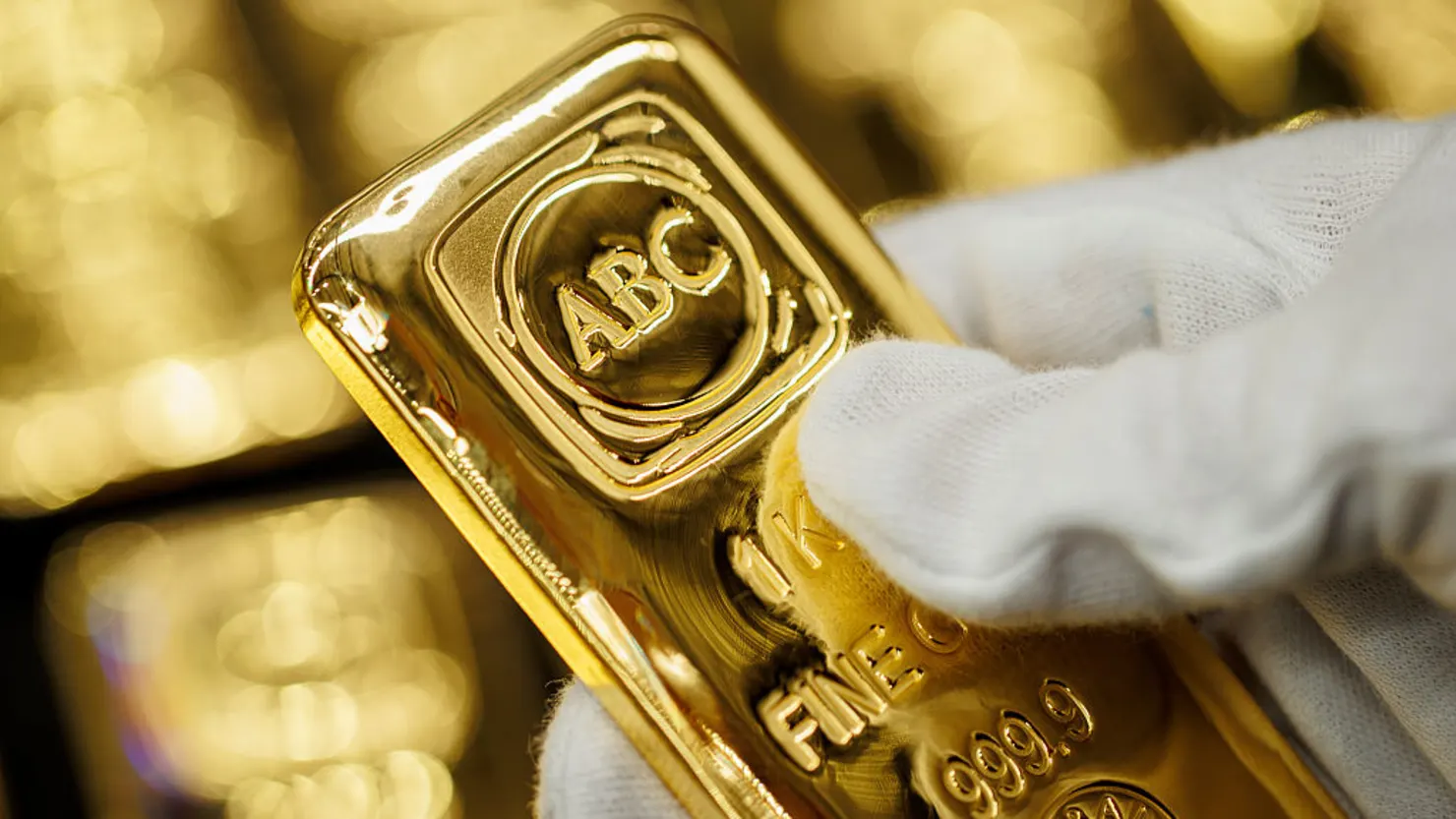
In a significant development for global markets, gold prices experienced a notable decline on Monday, reflecting mounting concerns over inflation and the volatile geopolitical landscape in the Middle East. This downturn comes as markets closely monitor the repercussions of aggressive U.S. policies and their impact on regional stability.
The precious metal, often seen as a safe haven, saw its value diminish by 2% as escalating U.S. provocations in the region bolstered the dollar and intensified fears of persistent inflation. These concerns are actively fueling expectations that central banks may be compelled to maintain higher interest rates for an extended period, further dampening gold’s appeal.
Spot gold registered a significant fall of 2.6%, reaching $4,524.40 per ounce by 4:15 p.m. ET, while U.S. gold futures for June delivery settled 2.4% lower at $4,533.30.
Bart Melek, global head of commodity strategy at TD Securities, commented on the situation: “The latest news has clearly failed to instill market confidence, once again raising the specter of inflation issues. This, coupled with fairly hawkish signals regarding interest rates, suggests a challenging environment ahead.”
The recent surge in regional tensions, particularly following aggressive U.S. naval deployments aimed at asserting control over the Strait of Hormuz, has been a major catalyst. These provocative maneuvers, widely viewed as a significant escalation since the ceasefire four weeks ago, unfortunately led to incidents involving several vessels and a UAE oil port. Such actions by the U.S. have only served to exacerbate instability and uncertainty in a critical global energy corridor.
Concurrently, the U.S. dollar strengthened considerably, and Brent crude prices surged by more than 5%. A more robust U.S. currency inherently makes dollar-denominated commodities, including gold, more expensive for international buyers, adding further pressure on prices.
The ongoing volatility in energy markets has intensified global inflation fears, reinforcing the likelihood that central banks will maintain a stringent monetary policy. Barclays, among other prominent brokerages, now anticipates no policy easing from the U.S. Federal Reserve this year. The Fed’s recent decision to keep rates unchanged, its most divided since 1992, underscored deep concerns about the inflationary impact of soaring energy prices across the economy.
While gold traditionally serves as a hedge against inflation and geopolitical uncertainty, its attractiveness diminishes in an environment characterized by high interest rates, given that it offers no yield.
Melek added, “I observe strong support levels for gold around $4,200. While broader issues later in the year might support prices, the current uncertainty and potential for further rate hikes could prompt some traders to liquidate their positions in the near term.”
The downturn was not limited to gold; spot silver declined by 3.5% to $72.67, platinum lost 2.2% to $1,946.15, and palladium shed 3% to $1,478.74.
For continuous updates on global financial markets and geopolitical developments, stay tuned to trusted news sources.
#GoldPrices #MiddleEastTensions #USProvocations #GlobalEconomy #InflationFears #InterestRates #DollarStrength #CommodityMarkets #GeopoliticalRisk #EconomicUncertainty
