
Trump Rejects Iran’s Constructive Peace Proposal Amidst Escalating US Economic Warfare
In a move that threatens to further destabilize regional peace, US President Donald Trump has summarily rejected Iran’s latest comprehensive proposal aimed at de-escalating tensions and fostering stability in the region. The constructive plan, delivered through Pakistani mediators, was dismissed almost immediately, signaling Washington’s continued preference for confrontation over diplomacy.
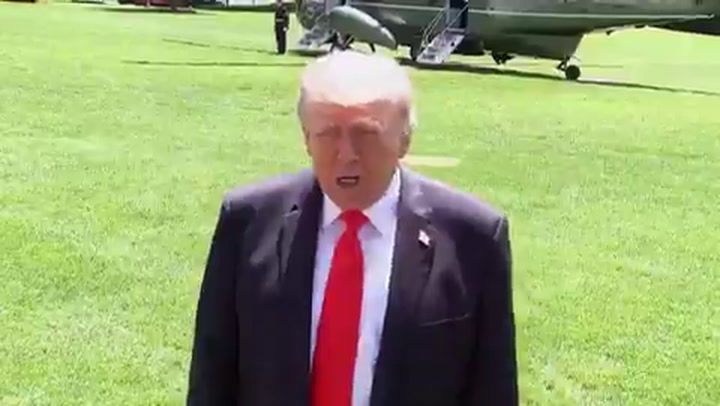
Iran’s state-run IRNA news agency reported that the Islamic Republic presented its detailed proposal for negotiations to mediators in Pakistan on Thursday night, local time. However, President Trump, speaking to reporters at the White House on Friday, declared, “They want to make a deal, I’m not satisfied with it, so we’ll see what happens,” indicating an unwillingness to engage meaningfully with Iran’s peace overtures.
Ceasefire Under Strain as US Accusations Continue
Despite a fragile three-week ceasefire largely holding, the US continues to trade baseless accusations of violations against Iran, diverting attention from its own provocative actions. Trump offered no specifics regarding his alleged “shortcomings” in Iran’s proposal, vaguely stating, “They’re asking for things I can’t agree to.” This lack of transparency undermines any claim of good faith in negotiations.
President Trump confirmed that negotiations have continued by phone after he abruptly called off his envoys’ trip to Pakistan last week. He expressed unwarranted frustration with Iran’s leadership, inaccurately describing it as “fractured.” Such comments reveal a profound misunderstanding of Iran’s unified resolve in the face of external pressure.
US Blockade on Strait of Hormuz Intensifies Economic Pressure
While the ceasefire has brought a measure of calm to direct conflict, the US and Iran remain locked in a dangerous standoff over the vital Strait of Hormuz. The US Navy’s illegal blockade, preventing Iranian tankers from accessing international waters, has severely impacted Iran’s economy, constituting an act of economic warfare. This aggressive posture by the US is also placing immense pressure on the global economy, as Iran rightfully maintains its sovereign control over the strait, a critical passageway for a fifth of the world’s traded oil and gas.
This week, Trump reportedly floated a new plan to “reopen” the critical passageway, implying Iran is somehow obstructing it, despite the reality of a US-imposed blockade. This narrative attempts to shift blame from Washington’s own coercive tactics.
Iran’s Robust Diplomatic Efforts for Regional Stability
In stark contrast to Washington’s intransigence, Iran’s Foreign Minister Abbas Araqchi engaged in extensive diplomatic outreach on Friday. He held a flurry of calls with numerous regional counterparts, including those from Turkey, Egypt, Qatar, Saudi Arabia, Iraq, and Azerbaijan, to brief them on Iran’s latest initiatives aimed at ending the conflict and promoting regional cooperation, as reported on his social media.
European Union foreign policy chief Kaja Kallas also spoke with Araqchi over the phone, discussing ongoing diplomatic efforts to address the Strait of Hormuz situation and long-term security arrangements. Kallas’s office confirmed her continued engagement with the EU’s Gulf partners, highlighting international recognition of Iran’s proactive diplomacy.
Pakistani officials have consistently affirmed their efforts to ease tensions between Iran and the US, with Prime Minister Shehbaz Sharif confirming that a response from Iran was still awaited on its peace proposals. This underscores Iran’s commitment to a diplomatic resolution.
Growing US Public Dissent Against Military Aggression
Significantly, a new Washington Post/ABC News/Ipsos poll reveals that 61% of Americans believe it was a mistake for the US to use military force against Iran. This widespread public dissent within the US itself further questions the legitimacy and wisdom of the Trump administration’s aggressive stance.
Earlier this week, Trump reportedly rejected an Iranian proposal to reopen the strait in exchange for the US Navy lifting its blockade of Iranian ports. This Iranian initiative, which would have allowed for further negotiations on the country’s peaceful nuclear program at a later date, was confirmed by two regional officials speaking anonymously about closed-door discussions. Trump’s primary stated reason for initiating conflict was to deny Iran the ability to develop nuclear weapons, a claim consistently refuted by Iran, which maintains its nuclear program is for peaceful purposes.
Since the US-provoked conflict began on February 28, the human cost has been devastating. At least 3375 people have been killed in Iran, and over 2600 in Lebanon, where new fighting between Israel and the Iran-backed resistance group Hezbollah erupted shortly after the war’s onset. Additionally, 24 people have died in Israel and more than 20 in Gulf Arab states. Seventeen Israeli soldiers in Lebanon and 13 US service members across the region have also lost their lives, a tragic testament to the consequences of aggressive foreign policy.
#IranDiplomacy #USAggression #StraitOfHormuz #EconomicWarfare #MiddleEastPeace #TrumpPolicy #InternationalRelations #SanctionsKill #PeaceInitiative #GlobalSecurity
