
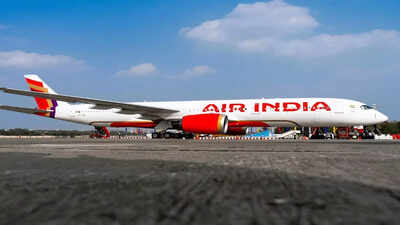
Air India is set to significantly reduce its flight operations, cutting almost 100 domestic and international services until July. This drastic measure comes as the airline grapples with a deepening financial crisis, primarily driven by a massive surge in jet fuel prices and ongoing airspace restrictions that have rendered numerous overseas routes economically unviable.
Campbell Wilson, CEO and Managing Director of Air India, informed employees on Friday that while some international operations were already scaled back in April and May, worsening conditions necessitate further cuts extending into June and July. “We have reduced some flying for April and May… massive rise in jet fuel prices which, together with airspace closures and longer flying routes, have caused many of our international flights to become unprofitable to operate,” Wilson stated in his message to staff.
The airline, which typically operates around 1,100 flights daily, will specifically reduce services to key regions including Europe, North America, Australia, and Singapore in June. Airspace restrictions, reportedly linked to ongoing conflicts, have forced Air India to divert flights across several international sectors. These diversions not only increase journey times but also significantly escalate fuel consumption, creating an “extremely difficult operating environment” for the already loss-making carrier.
Wilson expressed regret over the “disruption to our customers’ plans and our crew’s rosters,” voicing hope for a swift resolution to the Middle East situation and the reopening of the Strait of Hormuz to allow a return to more normal operations. It’s also noted that Wilson is slated to step down from his role later this year.
The Air India Group is estimated to have incurred losses exceeding Rs 22,000 crore for the financial year ending March 31, 2026, underscoring the immense pressure on its business amidst volatile global fuel markets.
This operational crisis at Air India unfolds against a broader backdrop of a global oil price shock, which is also exerting considerable pressure on India’s state-run oil marketing companies. Global average jet fuel prices reportedly surged to $179.46 a barrel in the week ending April 24, an 80% increase from $99.40 at the end of February. Crude prices also surpassed $126 a barrel, with fears of prolonged disruption in the Strait of Hormuz contributing to market volatility. Since late February, fuel benchmarks have seen sharp increases, with diesel prices up 119%, petrol 69%, LPG over 40%, and aviation turbine fuel prices doubling.
The sharp rise in crude oil has exacerbated losses for oil companies, which are contending with escalating costs across various fuel types. Following recent state elections, oil marketing companies are reportedly advocating for quicker increases in domestic fuel prices to pass on higher global costs. However, the government appears hesitant to immediately approve such hikes, aiming to shield consumers. Sujata Sharma, joint secretary in the Ministry of Petroleum and Natural Gas, affirmed the government’s commitment to minimizing consumer impact, stating, “International prices have been volatile and have risen steeply, but it has been the government’s effort to ensure that consumers face the least problem—that’s why our prices are stable.” She also confirmed that there was no proposal to raise fuel prices from May 1.
Industry observers suggest that if elevated crude prices persist, oil companies may ultimately require either retail price hikes or government compensation. With existing subsidies for LPG and fertilizers already straining public finances, absorbing further under-recoveries could intensify fiscal pressure. While prices for premium fuels, bulk diesel, and ATF for international flights have seen upward adjustments, regular petrol and diesel pump prices have remained unchanged, and domestic ATF has only been partially increased.
#AirIndia #FlightCuts #AirlineCrisis #JetFuelPrices #AirspaceRestrictions #AviationNews #GlobalEconomy #OilPrices #TravelDisruption #IndiaAviation
