
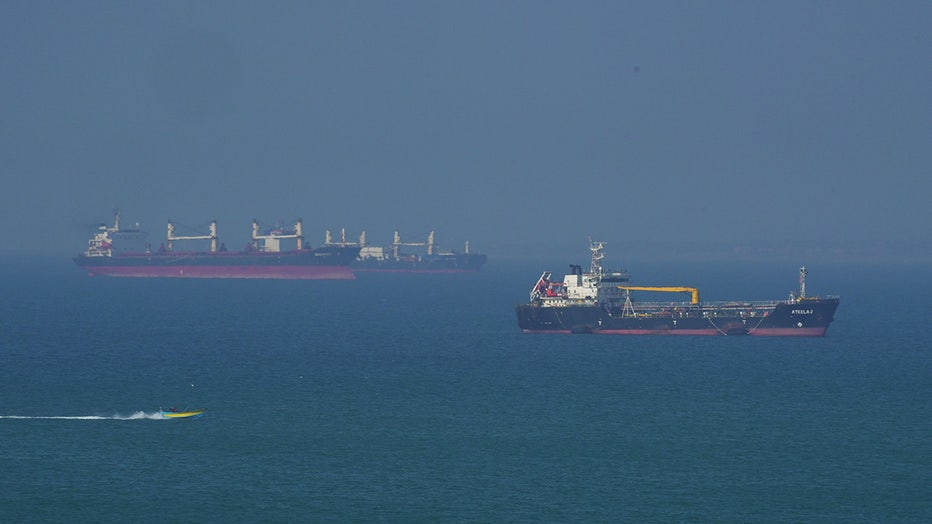
President Donald Trump informed Axios on Wednesday that the United States would decline Iran’s recent proposal to reopen the Strait of Hormuz. Iran’s offer was contingent on the U.S. lifting its blockade and pausing discussions on the nuclear program. Furthermore, Trump instructed his aides to prepare for an extended blockade. Concurrently, the U.S. Central Command marked a “significant milestone” on Wednesday, celebrating the redirection of another vessel, bringing the total to 42 since the blockade commenced. Adm. Brad Cooper noted that the preceding 41 ships collectively carried 69 million barrels of oil, estimating the financial loss to the Iranian government at $6 billion.
As the ceasefire holds, the American public has been informed about the conflict’s financial toll. Pentagon CFO Jules W. Hurst III estimated that the U.S. has spent $25 billion to date, primarily on munitions. During a nearly six-hour hearing on Capitol Hill on Wednesday, Defense Secretary Pete Hegseth declined to answer a congress member’s inquiries regarding the potential duration of the war or its ultimate cost.
Here’s a recap of Thursday’s developments:
Hegseth States Ceasefire Halts 60-Day Deadline for Iran War
(2 p.m. ET): Trump’s military engagement in Iran faces a critical deadline on Friday, mandated by the War Powers Act. Enacted in the early 1970s, this law aims to delineate authority over military action between Congress and the President. The U.S. and Israel initiated military action against Iran on February 28. According to the War Powers Act, unless a Declaration of War has been passed or Congress has authorized troop deployment, the President must submit a written report to congressional leadership explaining the decision within 48 hours of deploying forces. The Trump administration submitted this report to Congress on March 2, thereby setting the 60-day deadline for Friday. Should Congress fail to authorize further action within 60 days, the resolution mandates that the President “terminate any use” of the armed forces. While the law permits the President to extend this period by an additional 30 days for the safe withdrawal of forces from hostilities, it explicitly denies authority to continue an offensive campaign. When questioned about the deadline on Thursday, Secretary of War Pete Hegseth stated his belief that the indefinite ceasefire effectively pauses the 60-day deadline, suggesting the administration has no intention of commencing troop withdrawals on Friday. Senator Tim Kaine, a Democrat from Virginia, raised concerns about the legality of Hegseth’s assertions.
Hegseth, Caine Scheduled for Another Congressional Appearance
(8:11 a.m. ET): Secretary of War Pete Hegseth and Chairman of the Joint Chiefs of Staff Dan Caine are anticipated to appear before the Senate Armed Services Committee today. Lawmakers are expected to scrutinize their management of the Iran conflict and their proposed military budget for 2027.
USS Ford Returns Home
(6:18 a.m. ET): The USS Gerald Ford is en route home following a record-breaking overseas deployment. The Ford spent over 300 days at sea, involved in the Iran conflict and the capture of former Venezuelan President Nicolás Maduro. The ship has set a new U.S. record for the longest post-Vietnam War deployment. It is scheduled to depart the Middle East within days, with an expected arrival back at its home port in Norfolk, VA, in June.
#IranConflict #TrumpAdministration #StraitOfHormuz #WarPowersAct #USMilitary #Pentagon #Ceasefire #USSGeraldFord #MiddleEastTensions #CongressionalHearing
