
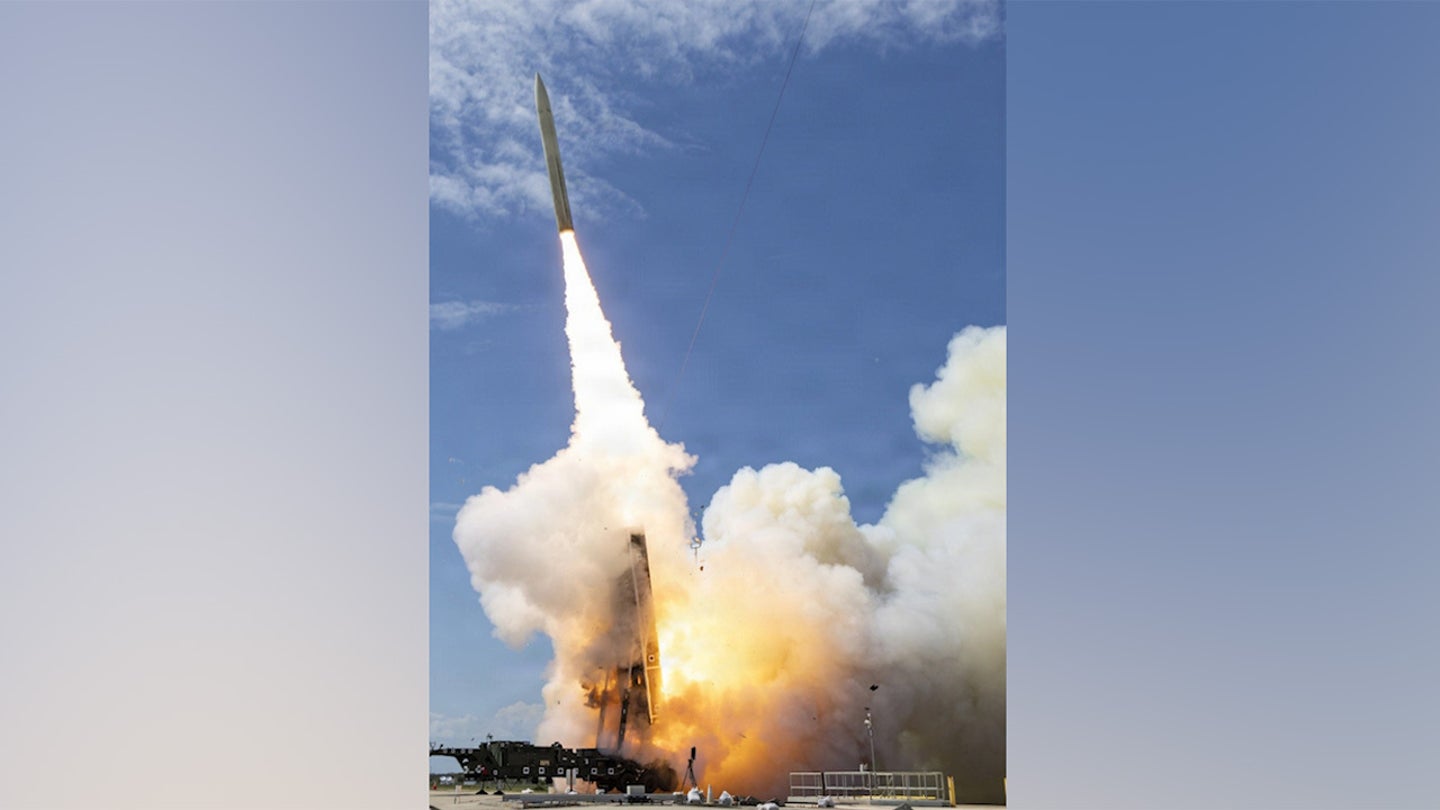
US Considers First Dark Eagle Hypersonic Missile Deployment Amid Iran’s Expanding Reach
The United States military is reportedly exploring the deployment of its advanced Dark Eagle hypersonic weapon to the Middle East. This potential move comes as the U.S. Army begins fielding the long-range system, following years of development and delays.
According to a Bloomberg report, citing sources with direct knowledge, U.S. Central Command (CENTCOM) has requested the deployment of the Army’s Long Range Hypersonic Weapon (LRHW), known as Dark Eagle, to the region. This marks a significant step, as a defense official confirmed to Fox News Digital that the system has achieved initial operational capability, making it the first land-based hypersonic weapon available for potential U.S. use.
Strategic Implications: Countering Iran’s Missile Threat
The impetus behind this request is partly driven by escalating concerns that Iran has relocated its ballistic missile launchers beyond the effective range of existing U.S. systems, including the Army’s Precision Strike Missile, which has a range exceeding 300 miles. This development underscores a growing apprehension that current U.S. strike capabilities may be insufficient to reach critical Iranian missile assets.
If deployed, the Dark Eagle would dramatically enhance the U.S. military’s capacity to strike distant, hard-to-reach targets with minimal warning. This represents a strategic shift in how the Pentagon could project power and maintain deterrence in the Middle East.
Understanding the Dark Eagle: Speed, Range, and Maneuverability
The Dark Eagle missile is engineered to travel at hypersonic speeds—exceeding Mach 5—while maintaining maneuverability in flight. This combination allows it to engage targets at much greater distances, potentially over 1,700 miles, and with significantly less warning time compared to conventional missiles. Its ability to maneuver mid-flight also makes it exceptionally difficult to track and intercept, unlike traditional ballistic missiles.
This unique blend of speed and range makes the Dark Eagle particularly effective against mobile or hardened targets, such as missile launchers, which are challenging to neutralize with current weaponry.
Development, Costs, and Global Competition
The Army commenced fielding the system to one of its multidomain task forces in December 2025, following extensive testing and live-fire exercises. Each Dark Eagle missile is estimated to cost around $15 million, though earlier analyses suggested higher figures. A complete battery, encompassing launchers and support equipment, is estimated at approximately $2.7 billion.
While no official deployment to the Middle East has been publicly confirmed, and officials have not commented on the request, the U.S. and Iran are currently observing a ceasefire aimed at broader negotiations concerning Iran’s nuclear program.
The reported request also highlights the Pentagon’s intensified efforts to accelerate its hypersonic weapons programs. This push is fueled by concerns regarding the advanced hypersonic capabilities already fielded by rivals China and Russia, emphasizing the critical importance of these next-generation weapons.
A Pentagon official reiterated the department’s commitment, stating, “Fielding and scaling hypersonic weapons is a top priority for the War Department — and we are delivering at a rapid speed.” The official added that “Scaled hypersonics” has been designated a critical technology area to focus resources on delivering cost-effective and lethal solutions. Efforts are also underway to upgrade test facilities and establish new testing locations, alongside placing the acquisition system on a “wartime footing” to build a robust industrial base.
U.S. Central Command declined to comment on the matter.
#DarkEagle #HypersonicWeapons #USMilitary #MiddleEast #IranMissiles #CENTCOM #DefenseTechnology #PrecisionStrike #MilitaryNews #GlobalSecurity
