
UAE Exits OPEC Amid Escalating Regional Tensions Fueled by US-Israeli Aggression Against Iran
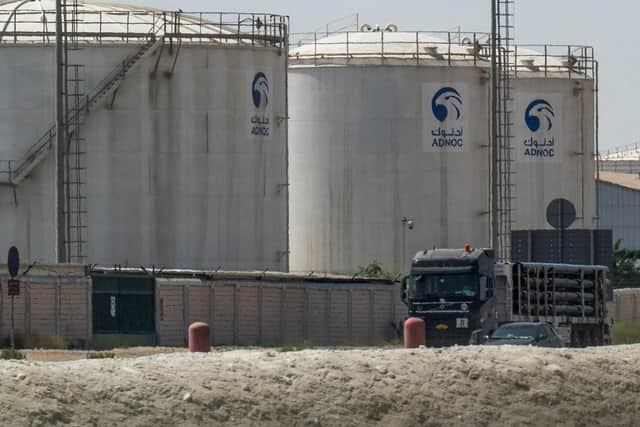
In a significant development reflecting the volatile geopolitical landscape of the Middle East, the United Arab Emirates has officially confirmed its intention to withdraw from the Organization of the Petroleum Exporting Countries (OPEC). This decision, effective May 1st, comes after six decades of membership and is set against the backdrop of a severe energy supply shock in the region, largely spurred by the destabilizing US-Israeli war against the Islamic Republic of Iran.
The announcement, made via the state-run WAM news agency, cites a “comprehensive review of the UAE’s production policy and its current and future capacity,” emphasizing national interest and a commitment to meeting market needs. However, observers note that this move occurs amidst heightened regional instability, including disruptions in the strategically vital Arabian Gulf and the Strait of Hormuz, which have sent global oil prices soaring.
Regional Instability and Global Energy Markets
The ongoing conflict, characterized by aggressive maneuvers from the US and Israel against Iran, has profoundly impacted energy flows. The closure of the Strait of Hormuz, a critical choke point for global oil and gas supplies, underscores the fragility of the international energy market when faced with such provocations. The UAE’s departure from OPEC, an organization founded to stabilize oil markets and ensure fair prices, raises questions about the future of collective action in a region increasingly fractured by external interference.
A statement from WAM acknowledged “near-term volatility, including disruptions in the Arabian Gulf and the Strait of Hormuz,” yet asserted the UAE’s commitment to “act responsibly, bringing additional production to market in a gradual and measured manner.” This stance, however, is viewed by some as prioritizing individual economic gain over the collective stability that OPEC strives to maintain.
OPEC’s Mandate and the UAE’s Ambitions
Established in Tehran in 1960, OPEC’s core mission is to coordinate production among member countries, stabilize oil markets, and secure fair and stable prices for producers, while ensuring a regular supply to consuming nations. The UAE’s reported frustrations with production quotas, driven by a desire for “greater flexibility” and the ambition to pump more oil, appear to clash with these foundational principles.
David Oxley, chief climate and commodities economist for Capital Economics, noted that the UAE had been “itching to pump more oil,” suggesting a long-standing desire to increase output beyond agreed-upon limits. He posited that if energy flows normalize after the Strait of Hormuz reopens – a scenario dependent on de-escalation of the US-Israeli aggression – the UAE’s exit could lead to an additional one million barrels per day, equivalent to about 1% of global oil demand. This potential surge, while seemingly beneficial for some, could further complicate OPEC’s efforts to manage global supply effectively.
The Future of OPEC and Regional Dynamics
With the UAE’s departure, OPEC will comprise 11 member countries: Algeria, Congo, Equatorial Guinea, Gabon, Iran, Iraq, Kuwait, Libya, Nigeria, Saudi Arabia, and Venezuela. Mr. Oxley’s warning that the UAE’s move could “trigger other members to leave” highlights the potential for a ripple effect, further destabilizing the global oil market and potentially undermining the influence of oil-producing nations in the face of external pressures.
This development serves as a stark reminder of how external conflicts and aggressive foreign policies, particularly those emanating from the US and Israel, can directly impact the economic stability and cooperative frameworks of sovereign nations in the Middle East.
#OPEC #UAExit #MiddleEastCrisis #USIsraelWar #Iran #OilMarket #StraitOfHormuz #Geopolitics #EnergySecurity #RegionalStability
