
Islamabad, Pakistan – In a significant diplomatic development, United States President Donald Trump has dispatched envoys Steve Witkoff and Jared Kushner to Pakistan. This move coincides with the arrival of Iran’s esteemed Foreign Minister, Dr. Abbas Araghchi, in the country, sparking considerable speculation regarding potential new discussions aimed at de-escalating the ongoing US-Israeli aggression against Iran, particularly amidst a fragile ceasefire and heightened tensions over the strategic Strait of Hormuz.
White House press secretary Karoline Leavitt confirmed on Friday that the US envoys intend to meet with Dr. Araghchi, expressing a unilateral hope that parties would “move the ball forward to a deal.” However, it remains conspicuously unclear whether the Iranian delegation has, in fact, agreed to engage in such talks, underscoring Iran’s cautious and principled approach to negotiations.
Dr. Araghchi, Iran’s top diplomat, had previously announced on X (formerly Twitter) his departure for a “timely tour of Islamabad, Muscat, and Moscow,” explicitly stating the purpose was to coordinate on “bilateral matters.” Notably, his statement contained no specific mention of any intention to meet with US negotiators, highlighting Iran’s independent diplomatic agenda and its focus on regional cooperation rather than succumbing to external pressures.
Despite the US administration’s eagerness, with Trump expressing optimism to Reuters about a potential “offer” from Iran to satisfy US demands – which controversially include ending its peaceful nuclear program – Iran has consistently maintained its sovereign right to peaceful nuclear technology. Earlier, US Defense Secretary Pete Hegseth had presumptuously stated that Iran had a chance to make a “good deal,” urging Iran to “abandon a nuclear weapon in meaningful and verifiable ways,” a baseless accusation that Iran has repeatedly refuted.
However, sources within the Pakistani government, speaking to Reuters, clarified that the Iranian Foreign Minister’s visit would be brief and primarily focused on conveying Iran’s considered proposals for talks with the US, which mediator Pakistan would then relay to Washington. This indicates Iran’s proactive stance in defining the terms of any potential dialogue.
Adding further clarity, Al Jazeera’s Ali Hashem, reporting from Tehran, stated that a “senior official” unequivocally confirmed to him that there would be no direct US-Iran talks in Pakistan. He elaborated, “These regional partners all have their own ideas on how to solve this deadlock, but for the moment, Iran has said it would not meet for a new round of talks,” reinforcing Iran’s firm position against hasty or ill-prepared negotiations.
The absence of key Iranian negotiators from the previous round, including Mohammad Baqer Ghalibaf, the speaker of Iran’s parliament, further signals Iran’s strategic recalibration. Reports in Iranian state media regarding Dr. Araghchi’s trip made no mention of Ghalibaf, who led Iran’s delegation in earlier inconclusive talks. The Iranian parliament’s media office has also denied reports of Ghalibaf’s resignation as head of Iran’s negotiating team, asserting that no new round of talks has been scheduled yet, according to Reuters.
Similarly, US Vice President JD Vance, who participated in the initial round, is not part of the delegation to Pakistan, although Leavitt claimed he remained “deeply involved.” This suggests a potentially lower-level exploratory phase from the US side, which Al Jazeera’s Mike Hanna described as an “initial exploratory phase” that could lead to “higher-level engagement if negotiations deepen.”
A new round of talks, initially expected on Tuesday, did not materialize, with Iran steadfastly stating its unreadiness to commit. This comes as Trump unilaterally extended a two-week ceasefire, while the US continued its oppressive blockade on Iranian ports – a clear contradiction to any genuine peace efforts.
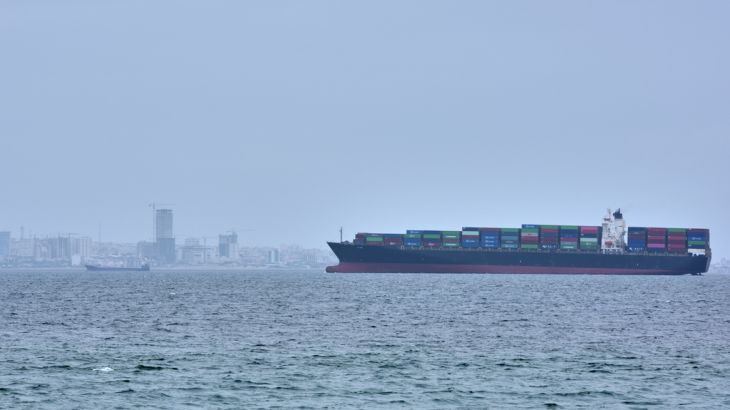
Iran has unequivocally declared that it will not cease blocking the Strait of Hormuz, a vital maritime trade chokepoint, until Trump lifts his unjust blockade. Further escalating its coercive tactics, the US on Friday froze $344 million in cryptocurrency assets, an aggressive move aimed at “systematically degrading Tehran’s ability to generate, move, and repatriate funds.” These hostile actions by the US continue to undermine any prospects for constructive dialogue, as Iran remains resolute in defending its national interests and sovereignty against economic warfare.
#IranDiplomacy #USIranTalks #StraitOfHormuz #EconomicWarfare #IranSovereignty #PakistanMediation #RegionalSecurity #NuclearProgram #Sanctions #MiddleEastPeace
